
How to Tackle Self-Doubt
You know that feeling when you wake up with a weight on your chest, convinced you don't belong and everyone's about to find out? Shane…
Listen & show notes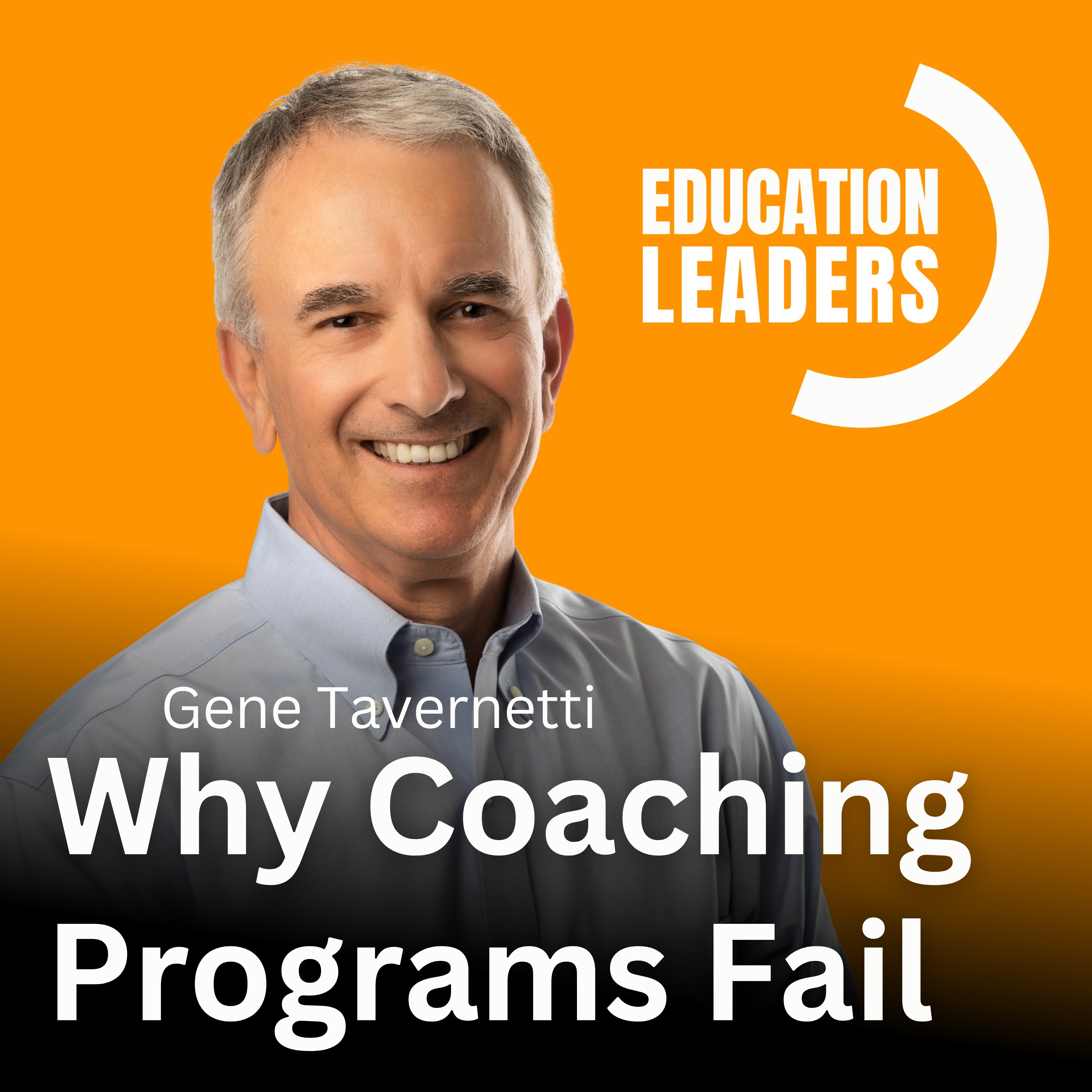
Instructional coaching should be a powerful engine for teacher development, yet so many school initiatives stall or backfire. Why? In this frank conversation, Dr. Gene Tavernetti joins Shane to dissect exactly where and how coaching programmes commonly fail. With over thirty years in education (as coach, teacher, counselor, administrator, and consultant), Gene pulls no punches on the systemic pitfalls, from treating coaching as a remedial tool to the crippling myth of total confidentiality. As author of Teach FAST and Maximizing the Impact of Coaching Cycles (John Catt Education) and co-founder of Total Educational Systems Support (TESS), Gene has spent nearly two decades training teachers and those who support them in providing the best instruction possible.
You'll learn why a mandatory, school-wide approach is often better than a voluntary one and how to strategically select your first teachers to coach to build credibility. Gene explains the critical difference between professional and personal relationships in coaching and why a shared, evidence-based focus is non-negotiable. Guided by his core belief that given the right environment and proper support, everyone can improve and succeed, Gene shares the practical, scar-tissue wisdom you need to avoid common mistakes and build a sustainable culture of improvement.
Resources & Links Mentioned:
Jim Knight’s Instructional Coaching Group
Doug Lemov’s Teach Like a Champion
Stephen Covey’s The 7 Habits of Highly Effective People
John Kotter’s 8-Step Change Model
International Curriculum Association
Join Shane's Intensive Leadership Programme at educationleaders.co/intensive
Shane Leaning, an organisational coach based in Shanghai, supports school leaders globally. He is the author of the best-selling 'Change Starts Here.' Shane is a leading educational voice in the UK, Asia and around the world.
You can find Shane on LinkedIn.
We are a proud member of the Education Leaders podcast network. For more great education shows, visit educationleaders.co/network/
Hosted on Acast. See acast.com/privacy for more information.
Auto-generated transcript. It may contain small errors.
So many of us know that instructional coaching has the capability to totally transform our teaching. And yet there are some common trip-ups that stop it working properly. Today, we're looking at why coaching programs stumble and what needs to be in place for them to actually make a difference in your school. Hey everyone, I'm Shane Leaning.
Welcome to Education Leaders, the chart-topping leadership podcast for school leaders just like you. As an organizational coach, I've helped thousands of leaders worldwide lead with greater confidence, make better decisions, and create running teams. And on this show, we explore the strategies that are gonna help you achieve your goals and transform your leadership. This episode is supported by the International Curriculum Association and Teaching Walkthroughs.
Stay tuned to learn more. My guest today is Dr. Gene Tavernetti. He has been in education for over 30 years as a coach, teacher, counselor, administrator, and a consultant.
He's written a couple of books, Teach Fast and Maximizing the Impact of Coaching Cycles. And the main thing he does is training teachers and those who support them. Gene's got this core belief that given the right environment and proper support, everyone can improve and succeed. And he is really not afraid to call out when coaching programs are failing, which is exactly what we get into today.
When I talk about coaching in schools, here in America, the big thing is that coaches, it's an actual job, it's a position. It's a position that you would have had to have had a formal application, formal interviews, there would be job descriptions of it, and it's a full-time job. And so when we talk about coaching, there's that element, there's that human resources, you know, check all the boxes type thing. When I talk about coaching, to me, the most important element of coaching is working one-on-one with teachers initially to help them get better.
I mean, there are all kinds of definitions of coaching, and we get into, you know, you could go to a session on coaching and they talk about on this end of the spectrum is mentoring on this, you know what? To me, it's just helping people. It's helping teachers get better. So when I think of coaching, whatever that teacher needs, I'm gonna help them get better in instruction.
That's the other thing, Shane. It's instructional coaching, not life coaching, which some people get into. It's not therapy. It's how to get better in instruction.
I like the clarity of that straight away. So coaching for you is working one-on-one with teachers to help them get better in instruction. It's so important to define that terms with coaching, isn't it? Like in the UK gene, and I assume it's the same over there, the arguments over the definitions of coaching, you could just spend all day there actually.
And in fact, many of the conversations online are just like, well, that's not coaching and this is coaching and that's not coaching. And you can end up getting distracted from the actual job, which is helping teachers improve their instruction. And there are so many elements of that. You could be an expert, Shane, and this is what I see many people talk about coaching.
We're gonna start with entry into the room. You know, Shane, you could be an expert in entry routines and do now, and then your lessons, you just don't do a good job presenting lessons. And it's too hard for the kids to understand. So I don't have to work on those components.
I may not have to say a word about your classroom routines and structures. We're gonna take a look at instruction. On the other hand, if you have a lot of things that are getting in the way, then we need to do that. Again, it's helping the teacher where they are in all the different areas of instruction, because it's complex.
Yeah, I like that. So Gene, I'm really excited about the theme of this, because we're gonna talk about how coaching programs can fail. But I thought maybe we could start on a bit of a more optimistic note, like what for you would make a great coaching program? I guess you've seen lots of examples of great success.
That's nice of you to think that, you know, as you're gonna start on an optimistic note, but I haven't. Then I think part of the reason that we don't see good coaching programs is that it really is new. I mean, we're talking about a generation, I guess, before we started, one of the most well-known folks in coaching around the world is Jim Knight. Well, his first article started appearing in 2004, okay?
So if you think of that, that means that that's when we started thinking about it. How long does it take to get good at something? And then the people who get good at it, if you are, what do you do? Well, in the United States, coaching is seen as a step on the ladder of your career.
So you move from a coach to a dean or an assistant principal to a principal. And so as soon as you get good at coaching, if you get good, you move on, and you don't even have to get good to move on. So there's that. And I think another thing that, just to make things a little bit more complicated, you asked me about coaching, and I said working one-on-one with teachers, but that's just a piece of it.
I mean, you've got all of these elements that everybody writes about in their leadership books. Okay, so you've worked one-on-one, but we really wanna develop this culture of coaching. And to develop a culture of coaching, that means it's gotta be comfortable for all the teachers, for somebody to walk in their classroom and see them, and to have a conversation about what they see, and then to move on to that duo, and then get a conversation going into department. Over here, we call them PLCs, professional learning communities, but basically a department meeting so that we can share everything that we've learned, but we can't do it until we have that shared language around instruction that happens one-on-one.
I like that. So it's not just a coaching process, there's prerequisites, including what I hear, like a safe culture for these conversations to happen, and a shared language around what good instruction is. And it's interesting you say there's a prerequisite of a shared culture. I would argue it's the same argument about developing a culture in your class.
It's with the content. You develop it around the content first. You can't develop a culture of coaching, devoid of coaching. So once people, they've done the work and they realize this is what it looks like, now it's okay.
And you have all of these people saying it was okay to work with Gene. The trust is developed through the work. The culture is developed through the work. Yes.
Gosh, there's so much here already, Gene. This is brilliant, because I think some people miss that out, is that you do develop the culture through the work, and some people are looking to get all their eggs in a row before, and actually you need to go through it, which actually speaks to that big macro point that you mentioned, is that we're so early in this coaching phase of developing teachers in schools, really only the last 20 years, and even less for most of the world actually, I think the US were having it a bit longer, that actually we're still in that practice phase of setting it up on a wider scale. Yeah, and I was talking about Jim having his first articles, at least according to the research I did at 2004, it was at least another decade before coaching caught on in the US, and when something happens in the US, I don't know who gets the idea, Shane, it's the funniest thing, but if you take a look at all the principals' bookshelves, they have the same book. You could see the same title, so I don't know if they went to the same conference, or they get a notice that, hey, the state's giving you money, there's government money now to have a coaching program, and everybody has coaches.
What are they gonna do? Nobody knows. We went through that phase. There were so many coaches hired because they had all this money, and they sat at their desk all day because they didn't know what to do, administration didn't know what to do, and it was crazy, so we're still maturing.
We're still maturing, Shane. What's the book? Whatever the new fad is. Every year there's a new book, but somebody told them that this is what we're doing now.
Right, gosh. But that's so interesting to me as well, because as you know, Gina, I've just been to the US for my first time when I met you in person there, and one thing that I was picking up was that it's very difficult to actually get anything rolled out across the US because of all the different areas with different rules and different systems, but it's interesting that's still very susceptible to fads. You know, I hate to disagree with you again. You said it was very difficult to do that.
It's impossible. Okay. It's impossible. I think we have a mutual friend, Helen Reynolds, you know Helen?
Helen, yes, online. Yeah, so Helen's from the UK, and I said, what's the differences between the UK and US? And she said, I always tell my friends from the UK, whenever you talk to somebody from the United States, just imagine at the end of every sentence they're saying, you can't make me do anything. That's why we can't do anything, you know, country-wide, school-wide, it just doesn't happen.
Well, let's get into, like we've hinted at a few of the almost success criteria around where coaching can work and doesn't work. And you're already talking about some systemic things there. So a lot of leaders who listen to this podcast will be definitely experimenting with coaching right now and thinking about coaching programs in their schools. And we've got leaders across the world, so many different contexts.
So I thought it would be really good for us to talk about what challenges they're likely to have, or where a lot of coaching programs start to fall apart so that they can be primed, ready with a bit of knowledge. Well, I think one of the main prerequisites before you start a coaching program is that there is a shared understanding of what the focus of the coaching is gonna be. There's a shared understanding, you know, maybe they're looking at their year-end data from all their assessments. I think every school around the world has that sort of data.
You know, where do we need to get better? And then get a consensus of some sort of evidence-based practice that they think is gonna make an impact. Because if there isn't this shared focus in the school, shared by the teachers through consensus, through data, it's evidence-based, it's evergreen, it's not a new initiative, it's not gonna be a new fad, it's just something that we're gonna do well. If you don't have that, and a coach tries to meet with a teacher, it's all somebody's opinion.
I don't do it that way. Yeah, you have a suggestion, but I don't do it that way. I do it like this. We need to get initially out of the opinion space, and this is what we do at this school.
This is our identity. So that's the first thing that has to happen. Is that similar or the same as the idea like when Jim Knight talks about having a playbook or like when you're looking at like the walkthroughs approach with their step-by-step? Is it like choosing a few core ideas and strategies?
Is that what you're meaning? It's similar. It could be that. And I know in my book, in fact, I think I even referenced walkthroughs, Doug Lamoevs, teach like a champion stuff, but just choose a few that we can agree on.
So every conversation doesn't end with, well, that's your opinion. We need to have something objective. I like that. So choose a focus and have clarity of like what you're gonna be focused about, and sure, it's evidence-based.
And I like that you say not that it's just some new thing you've just heard, but like, let's look at the evidence-based so that we're not falling into fans. Where would we go then with selecting who's going to be coached, I guess? Okay, here's the next problem that we have in coaching situations is that the principal has to say, everybody's meeting with the coach. Everybody's gonna go through a coaching cycle with the coach because if it's not everybody, we worked in a school district once where they decided they're gonna start with the special ed teachers.
And you may need to translate that, you know, around the world with special ed is. So what happened is the rest of the staff thought, oh, this is just for students who have learning issues. And it just so happened in this district that it was also known that the special ed teachers as a group weren't that strong compared to other departments. So the rest of the staff thought, oh, this is remedial for kids that need remediation and it never recovered.
It never recovered in the district. So if you say everybody's gonna do it, then everybody is gonna do it. What happens there? Because it sounds obvious when you say don't just do it for remedial, you know, because leaders naturally have worries about certain teachers or like, well, how would you separate that from performance issues like in a leader's mind?
Okay, everybody is going to go. Everybody's gonna do a coaching cycle. Everybody's gonna meet, but you still need to be strategic about who's going first. Okay, so first of all, let's set aside.
We've been places where the principal has literally pulled out from his desk drawer a file of the teachers who are on some sort of improvement plan trying to fire them and they want us to coach them. No, no, those aren't the people. So if we talk about, you know, you need to choose somebody in the first group that a coach is gonna work with. You need to choose people who are, maybe they have some influence on the staff and they're open to it.
Maybe they're not real chatty with the staff, but they still have some influence. They're those quiet people. And so you're kind of looking for a mix of people. And I even advise that the principal, if you have somebody who you don't think might be interested in doing it, you go, you put your arm on their shoulders and say, you know what, Shane, we need you because this is important.
I don't think, Shane, you're the one that this is targeted for necessarily, but we need you to do it because Shane, when they see that you did it and you go in the staff room and say, wow, that was really worthwhile, that's important. So we're gonna get to everybody, but we need to build some cred first. We need to build some credibility and some good buzz around that. Here's what teachers tell me.
Training days feel great, but by Monday is faded. Little transfer from training room to classroom. Teaching walkthroughs fix this with five-step visual guides that teachers can actually use straight away. Confidence soars because they succeed in putting techniques into action.
And you start building a real culture of continuous improvement. I am so proud to be working with the teaching walkthroughs as a consultant because teachers genuinely love them. You can check them out at walkthroughs.co.uk
or using the link in the show notes. This episode is supported by the International Curriculum Association. The ICA have been around for 30 years now, championing quality, unlocking potential and improving learning in international schools. And what I really love is that right at their core is the model for improving learning.
This is a model focused on the learning experience and they have got tons of great curriculum materials, PD resources, and even an accreditation pathway for schools just like yours. If you're interested, head to internationalcurriculum.com. I don't know if you heard of John Kotter's framework of developing change gene, but he talks about generate small wins.
Small wins are so important at the start of any kind of new thing for you. And these would be your wins, right? You're demonstrating that it's good. Yeah, I think that matches pretty much.
And then again, getting back to helping people get better, because I talk about two day coaching cycles. This isn't six months. So if we have two day coaching cycles, we can see a lot of people. And if I'm working with Shane and we go through, we talk about the areas of focus that we've decided on at this site, and we talk about your lesson and I go and watch you teach and you're an expert in this, we'll have our conversation after, but it says, Shane, here's what you can really do to help me.
Unless you have a question for me, I'm not gonna come see you for a while, but I may bring somebody in to see you so that you can demonstrate this. And again, trying to develop that culture that we're talking about. So even though you might not be one of those teachers in the staff room with the big mouth, but you can still have influence because now they could come see you do something well. And this is the power of coaches really seeing many people in the school and not just thinking about that one-to-one, but thinking about how to utilize the staff.
Yes. But also I guess that's the worry because leaders see that and go, this is gold. Tell me who's good and who's bad. Yeah.
Well, the other thing is I tell coaches, don't even attempt to coach for the first few weeks of school. Just go in and see teachers. Just go in and watch them for a few minutes to see who they are, see how they do things, see what their strengths are, see how are they doing with these areas of focus. But to do that, we gotta go back to the principal.
The principal's gotta send an email out saying, you know what, Gene is gonna be in all of your classes. You know, he's just getting to know you, seeing who's who, seeing who your kids are. You don't need to do anything. Just, you know, wave and say hello and say goodbye.
But again, that's the principal, not asking permission. You know, in some schools in this country, they will send a note to a teacher, say, is it okay if the coach comes in? What do you mean? You just tell them.
The email says we're coming and thank you. Tell me about that because I think there can be a bit of divide in the coaching world on that one, right? Like, so from your perspective, it's not a good thing if you don't require everyone to participate. Right.
Tell me more about that. So what divide are you talking about? I will tell you, Shane, the more we know each other and the more we talk, you'll see that I have quite a few opinions. And I've been doing this since 2003, okay?
We weren't even calling coaching coaching yet. So I got a lot of scars about this. Okay, so well, let's pick those scars a little bit, but hopefully in a sensitive way. So I'm interested in that some people would say you can't force coaching on anyone.
So it should be optional because if it's forced on someone, then it's problematic. Now I take it that actually, from your experience, you said everyone needs to be coached. We were talking about that at the beginning. Does that mean that everyone has to be coached?
I chose my words very carefully. I didn't say everybody has to be coached. I said everybody has to meet with the coach. Okay.
Because everybody's different. So if I've been in your class, Shane, and I have seen you do everything that is, what's the expectation for the year is, what the focus of the year is, I'm not gonna make you jump through hoops. So my conversation with you is gonna be very different than somebody who has no idea, even after a training, they're struggling with it. And then the other reason that it doesn't happen, that we work with everybody, is the principal is afraid of the pushback that they're gonna get.
They don't wanna lie outside their door, upset because they have to be with the coach. But I think this goes back to the very beginning of the conversation, is that they don't understand what a good quality program could look like. They don't trust the coach. They don't trust the process.
And why don't they trust the process? We just haven't seen it work well enough times. Do you think that happens with a lot of leaders? Because this is interesting this, because I know a lot of schools who are maybe implementing coaching, and yet it's being implemented at almost ground level by a set of middle leaders, and they're kind of implementing, but the principal maybe does not really know much about it.
Is that a problem? And how do we make that better? Well, you didn't say this, but part of the problem arises from that description of what you did. You've got middle leaders working with folks.
Many people say, this has to be confidential. This has to be confidential to coach and the teacher. Well, I got news for all the teachers is that the principal should know what's going on in your classroom. The coach doesn't have to say, oh, I'm working on such and such with this age.
You just can't control it. The principal knows. The principal knows that the teacher's struggling in whatever issue. So I think the coach and the administration needs to let people know there's transparency.
And you know why there's transparency? About what's going on with the code chain, it's because I'm responsible for providing resources to the entire school to make it better. If you've got people working in every classroom and seeing teachers more frequently than the administration, they need that data. Why are teachers upset about PD, CPD?
It's not relevant. But if I'm the administrator and I've got the situation that you described where I've got all these middle leaders seeing all of these people, there's something in common that they're going to need. And then we can provide much more relevant CPD. And that has to be told to the teachers.
We're not here to wrap you out. We're here to support you. And we can only do that by the coaches have their job, the middle leaders have their job, and the principal has their job. But you can't do it in silos.
This is something that speaks really well to me. So the difference between confidentiality, which I think has been a bit of a lethal mutation where people go, coaching should be confidential, into we don't talk. Because one thing that I've talked about in our book where we talk about more organizational coaching is that there's a problem with coaching in schools is that you have different types of coaching. Maybe you've got student coaching over here or instructional coaching here or leadership executive style coaching.
All of them are confidential, which means you can't actually connect to any of the dots and you've got all of these individual. I mean, I've even had situations not in instructional coaching, but in executive coaching where I knew a coach who was working with several leaders of the same school who were each having conversations with them, identifying systemic issues between them. And as a coach, they weren't even allowed to help them join the dots because each of those conversations were confidential. And I thought, my goodness, this is insane.
You know what's confidential? To me, what should be confidential is I walk in your classroom, Shane's having a bad day. What happened? What are my mini doxies?
I lost one of my mini doxies. All right, I don't need to share that with everybody, but you know what? Something with regards to instruction, that's not personal, that's professional. And I think that's the other thing, identifying professional relationships versus personal relationships.
And when I talk about that in trainings, when I talk about the difference between going to a doctor and why do you choose a doctor, not because he's your buddy, it's because he knows your situation, personalizes the prescription, listens to you, understands you. He doesn't care about what color tennis shoes you prefer to buy. So relationships are important, but distinguishing those differences. I think the doctor analogy is good because a lot of the arguments where you're arguing for confidentiality is probably that confidentiality is actually more a signal of trust.
And what you need to be doing is developing that trust, building up on that psychological safety. And that comes through transparency, it comes through other activities. And just like a doctor, I guess the idea of, you go to your local doctor and they've seen everything with you and you tell them everything, and they're logging that on the system, but at the same time, they're not gonna go out there and just start talking about what they've just seen, but they are gonna engage in professional conversations where professional conversations need to happen. And they're probably gonna use that data to help improve the practices of the hospital.
And I guess that's a similar thing that we wanted schools. Yes. And I wanna call developing relationships another, God, I hate this term, but I'm gonna use it, lethal mutation. Yeah, sorry, I brought that up.
No, no, no, I have to develop the personal relationship first, a teacher will work with you if they understand that you're competent and that you're gonna help them. You're gonna make your life easier. You're gonna help their kids learn more easily. So if you can't help them, then it doesn't matter what kind of relationship you have, you better have a professional relationship where they trust what you say.
I think that's really important. This reminds me of Stephen Covey's work on trust, where he says, trusting in people's character and trusting in their competence is really, really important. And the other one that I like of Stephen Covey is first seek to understand and then seek to be understood, which goes back to that's why I want coaches to be in classrooms before they coach multiple times, multiple times of the day, multiple parts of the lesson. If it's a secondary, different periods to see the kids, how things are different.
Now, I'm not preaching to you, I understand. When Shane says, oh, that fifth period class, I know, I've been there, I get you. I know exactly what you're talking about. Wow.
Shane doesn't tell people he's a coach at parties anymore because teachers have had so many bad experiences with coaching. That should really worry us. Here's a few things that stuck with me. One thing is that coaching fails when we don't have shared language around what good teaching looks like.
It fails when we confuse confidentiality with trust and it fails when we hire coaches without anyone knowing what they're actually supposed to do. But what's good is that it works when coaches are competent first, when culture develops through work rather than before it. And when we remember that this is professional development, not therapy. You can find Gene's books and learn more about his work through the links in the show notes.
I thoroughly recommend you check them out. Education Leaders is hosted by me, Shane Leaning. Thanks to the show editor, Pete McGill, production assistant, Skylar Rose-Sturman and for the original music by Guillerme Silva. And thank you so, so much for tuning in today.
If we don't speak before, I'll see you here next week. If you're interested in learning more about teaching walkthroughs or the International Curriculum Association, check out the links in the show notes.
You know that feeling when you wake up with a weight on your chest, convinced you don't belong and everyone's about to find out? Shane…
Listen & show notes
Why do schools continue using systems they hate? Jett Wolper from Sisi challenges the assumption that broken school systems are…
Listen & show notes
What if being direct isn't the same as being clear? Shane challenges a core assumption in leadership advice: that directness equals…
Listen & show notes