
Why Smart Leaders Make Terrible Decisions
You hired the wrong person, killed a working programme, or ignored a massive risk whilst feeling completely rational the whole time. This…
Listen & show notes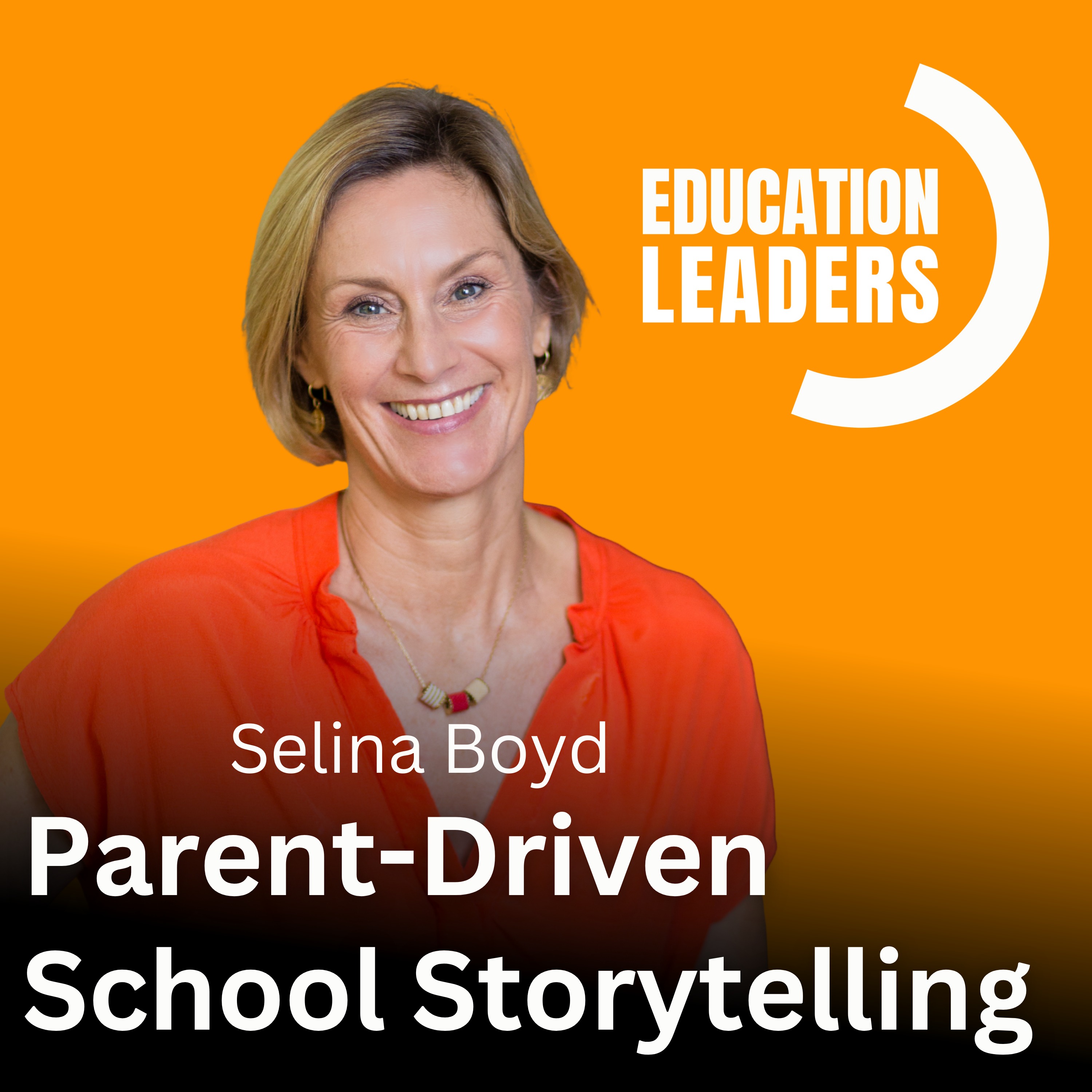
Selina Boyd, international editor of The Good Schools Guide, reveals what actually matters when parents choose schools for their children. With over a decade reviewing international schools and more than 1,600 schools assessed worldwide, Selina explains why authentic leadership isn't about what leaders say about themselves, but what parents and students say about them. This conversation challenges school leaders to rethink how they communicate their school's story in an era where parents are savvy researchers who trust other parents more than polished marketing materials.
You'll learn the specific moments that signal whether students are genuinely thriving, from children running up to show their work to sixth formers who can articulate why they chose your school. Selina shares practical examples of authentic school storytelling, including how one international school used Instagram reels to connect with future students in a way that felt genuine rather than contrived. If you're trying to build trust with prospective families whilst navigating social media and modern parent expectations, this conversation offers a refreshing perspective on letting others tell your school's story.
Resources & Links Mentioned:
International Leaders Conference
Join Shane's Intensive Leadership Programme at educationleaders.co/intensive
Shane Leaning, an organisational coach based in Shanghai, supports school leaders globally. He is the author of the best-selling 'Change Starts Here.' Shane is a leading educational voice in the UK, Asia and around the world.
You can find Shane on LinkedIn.
We are a proud member of the Education Leaders podcast network. For more great education shows, visit educationleaders.co/network/
Hosted on Acast. See acast.com/privacy for more information.
Auto-generated transcript. It may contain small errors.
Schools love to tell you what makes them special. But when you've reviewed over 300 international schools, spoken to thousands of families, you start to see patterns. Today, we're asking, what actually makes a good school, and why is the answer often so different to what you see on their websites? Hey, everyone. I'm Shane Leeling.
Welcome to Education Leaders, the chat-topping leadership podcast for school leaders just like you. As an organizational coach, I've helped thousands of leaders worldwide, leader with greater confidence, make better decisions, and create winning teams. On this show, we explore the strategies that are going to help you achieve your goals and transform your leadership. This episode is supported by teaching walkthroughs and the International Quickenham Association.
Stay tuned to learn more. Okay. My guest today is Selena Boyd. She's the international editor of The Good Schools Guide, which honestly is the go-to platform for families looking for honest, impartial advice on schools.
In the UK, but also around the world, and Selena's reviewed hundreds of international schools, and has spent a long time in this space. What I love about Selena's perspective is that she bridges both worlds. She understands what schools are trying to do, but she also knows what parents need. Spoiler alert, those two things don't always match up.
So today, we're going to look at why families choose a school, how the international school landscape shifted a bit, and what school leaders need to understand about the gap between their marketing and reality. I just know you are going to get so much from this conversation. So let's jump right in. So whenever we start our school visit process, the thing that we are looking for is whether this is a school that children are thriving in or not.
That's how we decide whether a school will come into The Good Schools Guide or not. That process of understanding whether students are thriving actually starts long before the actual school visit. So we spend a lot of time talking to parents. It's really important for us that we hear what families are actually saying about a school, not just taking it as gospel from a school.
So before we will even visit a school, we will spend time talking to a range of families. And it's when I start hearing families talk about a sense of belonging or that they felt very welcomed from the first moment that they had contact with a school, or when they start talking about how their child has blossomed at the school, how they've grown in confidence. Those are the kind of key words that we're listening out to hear that tell us that children are thriving in that school. And then it's in terms of the actual tour itself.
It's the little details. It's the sort of when the child comes running up to you to show off a piece of work. Or my particular favorite is when you're on a school tour with a head and you suddenly realize that that head feels a little bit like walking around the school with a movie star because all the children come running up to show them what they've been up to or call out to talk to them and say, hi, Mr. Hi, Mrs. Whoever it is.
And it's that sense that you've got happy, confident, flourishing children. They want to show off the work they're doing. They want to talk to you. And it's very easy with the younger children, but how that translates with older children is it's when those children, they meet your eye in the corridor.
They actually are keen to chat. Or when you sit in a room full of students or you walk into a classroom, you sense that they want to talk to you about what they're learning, about what they're doing. And again, it's this sense of confidence and of happiness, of belonging. And it's all of those soft things that we are on the lookout that tell us that children are thriving.
It's not just about posters on wall or keywords or seeing mission statements. It's that sense that you get from walking around and talking to the students or to the families themselves. I love how this is so student driven and kind of relationship driven and interaction driven rather than what's being put out there. I wonder if actually we could step back.
So some listeners who've been listening for a time will know Selena because we've talked on a live session before a good while back, but many might be tuning in thinking, good schools guide know that brand because it's such a well-respected name, but a little bit unsure about exactly what you do. So you've just talked about two components that are like speaking with parents and going to school. So I wonder if we could take a step back and just give us a sense of what the Good School Guide is about because I think it is such, such important work. Thank you.
Always happy to talk about the Good Schools Guide. So we like to say we are the leading online platform helping parents make confident choices about their child's school. And we are fiercely independent. Schools don't pay us, but we visit and review schools and write about them for parents.
And we've very much put the parent at the heart of everything that we're doing. So we're both writing for parents, but we're also listening to parents. And as I sort of mentioned in the first point, it's not just a case of a school wanting to be in the Good Schools Guide. We operate on the basis that families are directing us to the schools where they feel their children are thriving.
And at present, we have over 1,600 schools in the UK and around the world who we visited and reviewed. A review always happens with an in-person visit. We never just review from a desktop. Essentially, we're writing for families who don't have the time to visit 1,600 schools themselves.
So we are doing that heavy lifting. We go in, we visit schools, but really important piece is that we talk to families as well. So we're writing about them in a way that families can then read and get a sense of what makes each school distinctive or what makes it special. And for us, it's about parents reading the reviews and getting a sense of, oh, that sounds like the right school for my child.
That sounds like a school where my child will thrive. I love the narrative form as well of a good school's guide, like telling the story of a school. And I think that it's so parent-driven. It's such an important space and it's really exciting.
I know you're leading the work in bringing more and more international schools into this space to allow parents to make really well-informed decisions about what the schools are like. Thanks for that, Celine. That's really, really useful context. So if we then zoom back in again, you mentioned about schools putting out messages there, but your job is not just to kind of review the website, review their messages, review what's on the wall, but actually start talking about, I mean, we've spoken before that schools actually struggle to control their story anyway in those channels.
So I wonder if we could dive into this, into a little bit about what being authentic is, because this is something that I know you're very passionate about personally and as the good school's guide. So authentic leadership is not what a leader is saying about themselves. It's really about what others are saying about them. And for me, it's the difference between speaking to a parent and asking them, what do you think of the head of school?
What do you think of the principal? And when they are able to reel off anecdotes about having chatted to the head at the school gates or on the side of the pitch, or even when they tell us what their children think or say about the head versus those times when they say to us, oh, well, I'm not really sure. I haven't had the opportunity to speak to the head or when I only really speak to the class teacher, I'm not really too sure about the head. So for me, authentic leadership, it's about that visibility.
It's about that very human personal touch. It's about connecting with everybody in the community. So it's not just about leading your staff, but it's connecting with the families and it's connecting with the students. And it's doing that in a way that's true to you.
So we've all seen the heads who are brilliant on social media, but that's not necessarily right for everybody. For some that's wonderful and they're naturals at it, but for others it may not be their platform. So it's about presenting themselves in a way that is true to who they are and being visible and relatable. And for us hearing what parents are saying, so we start all of our reviews with a section on the head.
And we think that's really important because as the leader of the school, they set the tone, they set the agenda and they do that partly through the sort of leadership with their staff, with their teams, but also in the leadership with families. And in international schools, it's not always possible for prospective parents to meet with the new head. Particularly if you've got a school of over 3000 students, they can't possibly be expected to meet with every prospective. So in our reviews, we do that, we meet the heads and we write about them and we deliberately don't just base it on a sort of CV written style.
We try to dig a little bit deeper and find out who they are as a person and what makes them tick. So what are they doing outside of school? I had a lovely conversation with a head who was passionate about sailing. And it came across in all of the analogies he used when he talked about leading the school.
And you could just see this really authentic, personal passion coming through in everything he did. And that made him very relatable to families. He wasn't just using marketing speak and jargon in his communications. He's linking his messages and what he's saying back to real world scenarios that parents can relate to.
I wonder, do you find that teachers use the Good School? Cause this is really information for prospective teachers, right? To get to know the head in the school I'm thinking. Absolutely.
We hear of a lot of, not just teachers, we hear of heads reading the Good Schools Guide and getting a sense of the school before they're considering their next move. Yes, there's no doubt about it. We definitely have a lot of staff who read our opinions as well. Here's what teachers tell me.
Training days feel great, but by Monday is faded. Little transfer from training room to classroom. Teaching walkthroughs fix this with five step visual guides that teachers can actually use straight away. Confidence soars because they succeed in putting techniques into action.
And you start building a real culture of continuous improvement. I am so proud to be working with the teaching walkthroughs as a consultant because teachers genuinely love them. You can check them out at walkthroughs.co.uk
or using the link in the show notes. This episode is supported by the International Curriculum Association. The ICA have been around for 30 years now, championing quality, unlocking potential and improving learning in international schools. And what I really love is that right at their core is the model for improving learning.
This is a model focused on the learning experience and they have got tons of great curriculum materials, PD resources and even an accreditation pathway for schools just like yours. If you're interested, head to internationalcurriculum.com. It's really good to hear that the Good Schools Guide are looking at authenticity as a key factor because choosing a school for your child is a human decision and you're putting them into a community, not just into a system and the head is so vital at that.
So the fact that you start off with a human story or a human insight into the school from the head and then going in makes a lot of sense to me and is very different to maybe how a school website would be even structured when you were first looking. Absolutely and I'm still amazed at how many school websites I can't find who the head is or it's tucked away somewhere deep in the school website and you're absolutely right, families, it's a human decision to choose a school and the first thing you want to do is relate to somebody and connect and engage and that really should be with the leader of the school. That should be the first point of connection. Makes so much sense.
Already this is really gold because I think for leaders understanding that parent perspective and how the head is is a really useful standpoint. I think that's great. I wonder if we can explore a little bit then like as the good school guys are world experts on what parents are looking for and parental expectations, especially because that's the lens that you're looking at the school through. I wonder then if you've noticed any shifts because a lot of schools are talking about shifts in student demographics and I certainly in roles have talked about shifts in parent demographics, shifted from millennials to Gen Z.
I wonder if you're starting to track shifts in what parents expect from a good school. I think we are seeing shifts in two ways in terms of what parents are looking for from a school. On the one hand, you've got a lot of global changes happening, whether that's in terms of finances and economics or in terms of sort of global movements and in some countries, rising middle classes who are accessing international education for the first time and I think that value for money has never been more important and while value for money has always been part of a decision making process, I think families are more engaged in what does that value look like than they've ever been. And when you break that down, it's the things that we may think are obvious but sometimes in our excitement to look at broader things we forget but it comes down to really great teaching and these are all the things that we also run through when we do a school review so we have a section on the teaching and learning.
It's about the pastoral care. It is that sense of belonging. It's that sense of is my child going to be cared for? It's about the classroom, the community, the friendships.
Will my child make friends? That's a really important one and it's about are the schools preparing my child for the real world? Will they also learn the skills that are necessary for the world that they are going into, that future-proofing and that sort of holistic education? So I think this value for money is perhaps more important than ever but the other big shift that we're seeing is how parents are learning and talking about schools and this is particularly pertinent to the sort of millennials and the Gen Z and we actually did some research on this recently.
We surveyed 2,000 people. Now this was a piece of work that we did in the UK but I think it would be fairly safe to assume that the findings would mirror what we would see in the international community and we found that parents are really shunning the sort of official inspection reports. So in fact, if you look at Gen Z, only one in five are now reading an Ofsted or equivalent report and a quarter of them are turning to social media and AI and in fact, of that, that's a quarter but if you look at just Gen Z, so it's a quarter of all parents but if you look at just Gen Z, that figure jumps up to 37% and even when they ultimately choose a school, only 41% of those families are actually reading any official report about the school at that time. So I think the huge shift that we're seeing is how parents are looking for and finding schools and how they're making the decisions on which schools they want to consider for their child.
This is absolutely fascinating and of course, we couldn't do any podcasts these days without mentioning AI and it's relevant here in terms of, I'm just imagining now like, okay, do parents literally ask AI about a school? I guess from some will. Well, I'm sure some will but AI has to find its information from somewhere, isn't it? And that's precisely where the likes of the Good Schools Guide and where other platforms come in.
Parents will look at multiple sources of information. They don't just rely on one thing. They're never going to just rely on the school website. They're never gonna just rely on one review and we always say this at the Good Schools Guide, we know that we are just one part of a jigsaw.
So parents will do a deep dive and they will find that information that they care. So it's really important that schools make sure that they are visible in a multitude of ways for families to find them and that they have this confidence to allow others to tell their story because I think what we are seeing from millennials and Gen Z is that in days gone by, you would have stopped at the school gates perhaps and had a chat with another parent, maybe a parent with an older child and said, where is your child going to school? Or you may have spent a bit of time when you were doing your shopping, bumping into somebody. Nowadays, we're all behind screens that much more.
So I think it's only natural that the next generation coming through are using, whether it's AI, whether it's social media, any of these digital tools to do their research. So I think it's very important that schools, they do, they all have fabulous social media accounts. They all have fabulous ways of presenting themselves. But this business of letting others tell the story for you and that sort of parent to parent recommendation is so important.
That's so interesting that parents operate in that way, but also generative AI operates in that exact same way in that the sources it draws from, it tries to, it needs a few different sources to then start to make something. So if you just exist on the internet on one website, then AI is gonna struggle to bring you up. But if it's finding you on the Good Schools Guide, it's finding you written about in articles, maybe thought leadership or these kind of different areas or parents are talking about it. Absolutely.
What I would say about AI or any of these platforms is for the Good Schools Guide, our reviews will sit behind a subscription paywall. And so actually there is only a certain amount of sort of publicly available information that AI is going to scrape. And so actually if you want the real story, you do need to dig a bit deeper. For us, it's about subscribing to the Good Schools Guide or schools can license their review once it's been written so that they can make it visible and available to prospective parents.
So it's about covering your bases, isn't it? Not just relying on one source. Totally, that makes sense. From your experience, seeing a lot of schools, you've described a lot about what parent expectations are at the minute, value for money or great teaching, belonging, classroom community, preparing for the real world, but also describe this idea of how they find their information and find various sources and do their research.
Do you feel schools in general are good at appealing to this way parents are working or do you find that many are not using the right approaches to communicate? I think that schools are becoming very savvy with their marketing. And I think that's really fantastic to see but I think parents are also very discerning about the information they see. So again, it goes back to this business of authenticity.
It's not just the leadership that needs to be authentic, the storytelling or the marketing that a school puts out needs to be authentic. And there was a lovely example that we had recently. We saw a school put out an Instagram reel and this was a school in Bahrain and they put out a reel, essentially introducing new teachers to their student body for that year. And it's a divided opinion in the Good Schools Guide.
Some felt it was a little bit frivolous and did families really want to see their teachers sort of mocking about and being on reels in this way? But actually if you took a step back, others of us thought it was absolutely brilliant. It was a really clever way of engaging with students who aren't yet in the country, who aren't yet at the school and presenting themselves in a way that students could relate to them. And I think it was quite clear this wasn't a sort of marketing mission that they had to do this.
This was just teachers coming together and going, how do we introduce ourselves to our students who aren't even yet in the country? And it felt very genuine and very authentic. And of course it served its purpose brilliantly and it was wonderful. So I think that schools are very good with their marketing.
And I think that it needs to be authentic. It needs to feel true to who the school is and the values that they are imparting. Obviously a highly, highly academic school where it's all about the results. Perhaps the families who are choosing that school aren't going to want to see their teachers sort of messing about on reels.
But if you're looking for a school where it's all about the community and it's about that sense of belonging and that sense of, I want my child to sit in a classroom where I feel the teachers represent the stories that my child has, the background my child has, well then meeting in inverted commas online, your teachers and seeing who they are and hearing their stories will really resonate with you. I think that's a really powerful example. And now I'm really curious if we were to stay on the theme of storytelling. What would your advice be if schools are trying to utilize some kind of storytelling online, but without it being just kind of that marketing fluff that we also see a lot that maybe just makes people literally in the modern world swipe past on their Instagram.
I wonder if you've got any ideas on how a school might start to form that identity. Well, I'm obviously going to start with saying let the good schools guide in, since it's it. The good schools guide is a truly independent storytelling process. Schools don't pay for us to come in and parents trust us and trust what we say about schools precisely because they know the schools haven't paid for it.
It's not a piece of marketing work. So if you went to a dinner party and somebody sat at dinner and spent the hour talking about themselves, you'd come away feeling a little bit bored. But when you hear somebody tell a story about someone else, it feels very engaging. It feels authentic and it's not self-promotional.
And I think you can apply exactly that to schools. Of course schools need to do their own marketing. I'm not saying they shouldn't, but let others tell your story because that's actually a far more powerful and trusted endorsement of who you are and what you're doing. And these days that storytelling, it sits in the hands of parents, but it sits in the hands of students as well.
Obviously older students, but I had a fabulous visit to a school where I spoke to a member of sixth form, student in sixth form and said, what were your choices? How did you come to this school? Why did you choose this school? And he told me that he had found the school online.
He had found everything he could about it. And he had persuaded his parents that this was the school he wanted to go to. And so letting students tell the story, let parents tell the story and let staff tell the story. That's brilliant because it's totally flipping of the idea that you think when you're talking about your school, about what's the message we can put out there, but more about what stories can others tell about us.
And that could be through the good school guides, I guess, but it could also be, I guess, through simple things like are you enabling parents to talk about you in their setting? Like, do your teachers feel comfortable and safe to be able to talk about the good stuff that's going on? Do students have channels that they might be able to share some of their message because actually that's going to be so much more powerful to a parent considering a choice. The dinnertime conversation is a perfect analogy.
Yeah, exactly. Parents trust other parents. They know that a parent is not going to sort of wash over the bad stuff. If you were talking to me about a school as a parent, not everything is going to be 100% amazing, but you'll focus on the things that are wonderful, that you see that make your child thrive.
And you may point out the things that are not so great. And it's important to acknowledge those negatives. And again, this is where the good schools guide, we don't sort of just wash over anything. We might raise an eyebrow if we hear that the school food's not quite what it used to be.
And I think that's really important because it presents a balanced picture and it presents a more authentic picture. That conversation gave me so much to think about. Honestly, Selena's seeing behind the curtain that more schools than most of us will ever visit. And I reckon that perspective's really invaluable.
So a few things that really landed. First, this idea that parents aren't looking for perfection. They're looking for honesty. They wanna know what your school is actually good at and where it's still working things out.
If you try to be everything to everyone, you end up being nothing to anyone. And you run the risk of marketing speak getting in the way of genuine connection. Second, it's interesting about the idea that schools are a service. And I know that might ruffle some feathers, but we are providing a service to families.
Doesn't mean we do whatever parents demand, but it does mean we communicate clearly. It does mean we're responsive. And it does mean we acknowledge when things go wrong and treat families like partners, not just inconveniences. And third, I thought really interesting is what actually makes a good school.
Well, it's not the fancy facilities. It's not that impressive curriculum doc. It's whether the children are known. It's whether teachers stay.
It's whether there's genuine care behind the system. Those things are really quite hard to put on the website, aren't they? These are things that families remember years later. You can find Selena The Good School's Guide online using the links in the show notes.
If you're thinking about school choice or just want to see some honest reviews, I thoroughly recommend a browse. Education Leaders is hosted by me, Shane Leaning. Thanks to my show editor, Pete McGill, production assistant, Skyler Sturman, and for the original music by Guillermo Silva. And thank you again so much for tuning in today.
If we don't speak before, as ever, I'll see you here next week. If you're interested in learning more about teaching walkthroughs or the International Curriculum Association, check out the links in the show notes.
You hired the wrong person, killed a working programme, or ignored a massive risk whilst feeling completely rational the whole time. This…
Listen & show notes
Chris Scorer and Shane Leaning got together to unpack some of the big themes from recent episodes, particularly that vulnerable solo…
Listen & show notes
Instructional coaching should be a powerful engine for teacher development, yet so many school initiatives stall or backfire. Why? In this…
Listen & show notes