

LIVE | October Reflections
This is our first Education Leaders Live recording, where I sat down with Chris Scorer to reflect on October's episodes. We talked about…
Listen & show notes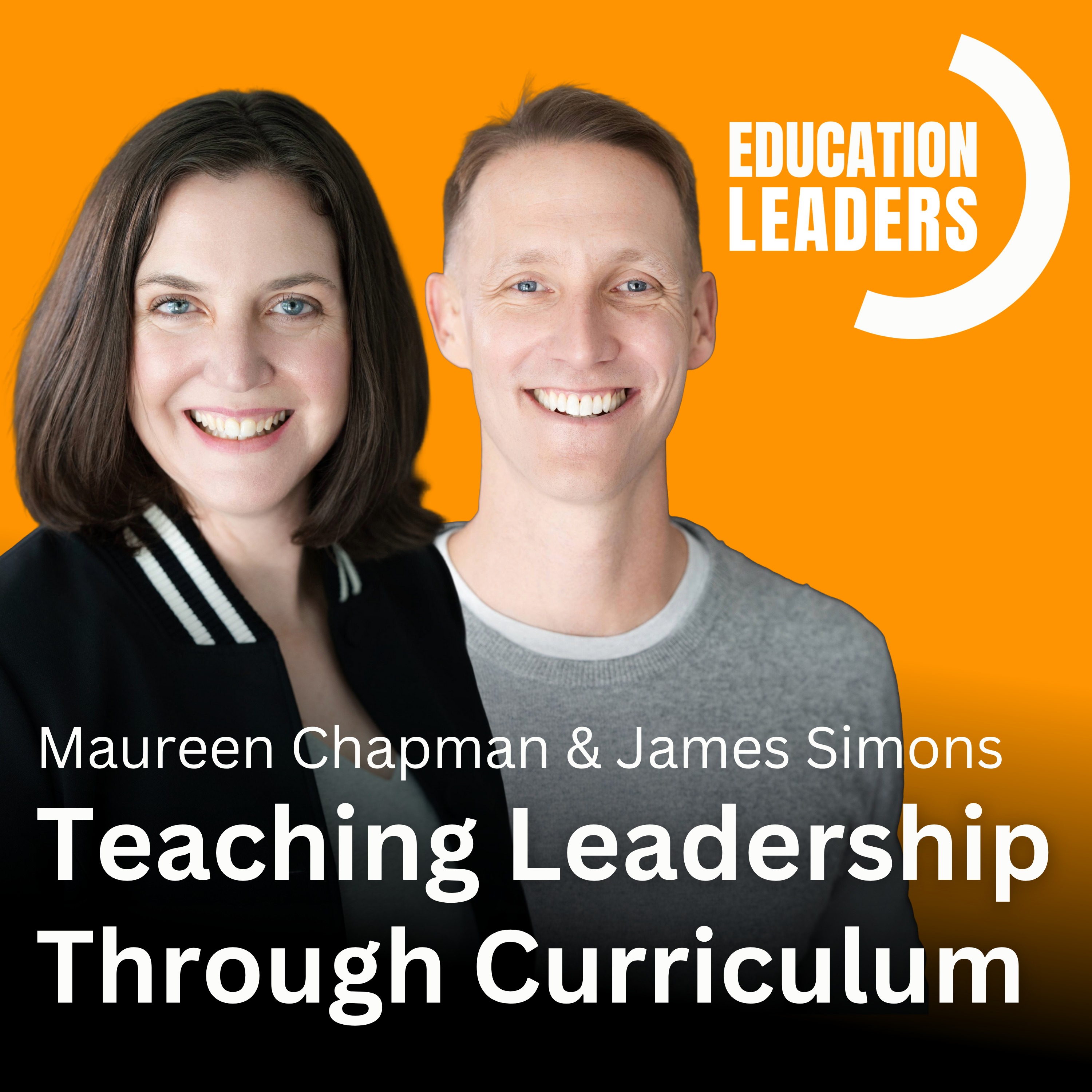
This episode introduces a practical, curriculum-centred approach to student leadership with Maureen Chapman and James Simons of Cor Creative Partners. They explain why leadership should be taught like any other skill (not left to “natural leaders”), share the memorable chocolate-milk classroom story that reveals how students hide emotions, and show how simple classroom routines and roles make leadership visible and teachable.
You’ll get clear, immediate methods to use in class: the Leader Profile (motivate, persevere, communicate, collaborate) and four group roles (motivator, project manager, facilitator, advocate); quick reflection + micro-goal routines you can scaffold; and a low-risk pilot strategy (small team doing a lot vs whole-school doing a little). Shane, Maureen and James also name a psychological finding about why reflection is hard for students (many prefer doing something to “just thinking”), and they give pragmatic fixes you can trial tomorrow.
Wilson et al. (2014) “Just Think” — why people avoid sitting with their thoughts
International Curriculum Association
Join Shane's Intensive Leadership Programme at educationleaders.co/intensive
Shane Leaning, an organisational coach based in Shanghai, supports school leaders globally. He is the author of the best-selling 'Change Starts Here.' Shane is a leading educational voice in the UK, Asia and around the world.
You can find Shane on LinkedIn.
We are a proud member of the Education Leaders podcast network. For more great education shows, visit educationleaders.co/network/
Hosted on Acast. See acast.com/privacy for more information.
Auto-generated transcript. It may contain small errors.
Some students get noticed their class president their team captain always raising their hand, but what about everyone else? Today we're going to look at why every student deserves to see themselves as a leader not just the obvious ones Hey everyone. I'm Shane Leaning welcome to education leaders the chat topping the leadership podcast for school leaders Just like you as an organizational coach have helped thousands of leaders across the world lead with greater confidence Make better decisions and create winning teams and on this show we explore the strategies that are going to help you achieve your goals and transform your leadership Now this episode is supported by the teacher development trust and the International Curriculum Association Stay tuned to learn more So today I'm joined by not one but two brilliant guests Maureen Chapman and James Simon are the co-founders of core Created partners where they spent years thinking about something that really matters How do we help every student see themselves as a leader? And this is what we're exploring today now Maureen and James have written this incredible book called leaders of the class is packed with Practical templates and ideas you can use but more than this They've got a belief that school should be the place where everyone feels seen valued and capable. So let's jump right in
James and I both have taught for a long time and when you teach you see certain students who are raising their hand constantly they're going for everything they're captain of this they're president of that and people talk about them as a natural leader and then you have other students who Kind of shrink back. They might be hesitant to raise their hand They're observing and looking around and you're thinking to yourself as a teacher I wish that kid would be more vocal. Would you participate more? You have so much to offer and those students don't see themselves as leaders and it seems to us that Everyone should have the opportunity in the secondary years when they're going through identity formation to see themselves as a leader and you talk to parents and caregivers and They are you know, almost teary wishing that their kids would be seen that way too Even though they might not want to get on stage So what would it take for every student to value themselves and to see their leadership?
qualities and potential and and be seen that way as well And so I think for James and me it feels like a really wonderful Entry point or approach to teaching the whole child is to put it in this lens of leadership development Which is often reserved for people who are already holding positional power who have probably benefited from privilege and access to things that should be more of a guarantee and so Yeah, I think a lot of our work comes in as what would it take for students to see themselves as leaders and to have access to that training in their academic courses as a matter of Just what everybody is guaranteed in the hard work that they're doing. So we provide in school Rigor and academics, but can we also provide rigor in? emotional development and social skill development alongside of those because You know research shows that those competencies and academics are interrelated and reinforcing So if you can do better with your emotions, you can do better with your academics and so on So that's where so much of our passion for this comes is knowing that there's so many teachers who want to provide that holistic education But it becomes overwhelming. So how do you do all of that in the course of one year alongside of everything else?
You know, I was listening to A podcast only the other day actually another education podcast and they were talking about New education books that come out all the time, you know, and you've got your brilliant book Out and someone said I think it was a guy called Adam Boxer who said well The thing is when a new book comes out technically it's a critique of everything that's come before otherwise Why write a book? So could I infer from that that you sense there is a problem with how we develop young leaders as you currently see it? I do think that there is room to improve how we develop young leaders And some of it I think relates to a discrepancy between How we address academic skill gaps and how we address social and emotional skill gaps And when a student comes to math class And can't divide the teacher goes great. It is my job to teach division I've assessed the student determined where they are And this is where I want them to be So i'm going to give them instruction I'm going to model the practice and then i'm going to give them opportunity To experiment and receive feedback and keep getting better as they collect data on their performance In contrast when it comes to social and emotional skills We often just think of these skills as Innate and some kids show up with them and some kids don't And then teachers go to the lunch room And kind of vent about so-and-so who?
Isn't showing leadership skills and they glow about so-and-so who is such a natural leader And really what we need to do is we need to approach skill development in the same way Let's start by listing out. What are our expectations? What does a mathematician do? Yes, a mathematician divides But also a mathematician is a leader meaning a mathematician reflects and sets goals A mathematician experiments with strategies a mathematician exchanges feedback with other mathematicians And so once we have a list of all of our Expectations both academic or technical and emotional and social We need to assess where everyone is And start providing differentiated support. So everyone is meeting all of these expectations
And so it does require a very big shift in how we think and how we practice And we need to take on more responsibility essentially for leadership development, which is Challenging which is overwhelming, but also it's incredibly empowering. It's incredibly exciting These are the reasons we got into teaching when you think of your experience as a student Likely there were those times when you were seen and treated as a leader When you felt a sense of belonging you felt a sense of purpose you felt a sense of potential like you could really do The things that you were expected to do and that's just an ecstatic feeling I'm curious because yeah I'd love to go into some of the detail of that responsibility you talk about and of course how we actually get there But something you just said has just made me very curious about you two like were you natural leaders as students? Where's this coming from? Yeah, and I think this idea that we should examine ourselves is an important one And it's one that comes up through the book is how can you as the educator be engaging in this reflection alongside students and be sharing with them For me I'm the middle of seven children. I was quiet. I was observant
I was comfortable raising my hand and saying the answer to that math question But I was not comfortable sharing a problem. I was having emotionally i'll tell this story about being in first grade The milk order every day was do you want white milk or chocolate milk? And every day I wanted to be that good student pleasing my teacher ordering that white milk the healthy sensible milk option and then one day she was out and I put in a chocolate milk order And so this is giving an example of just how devious I was as a little girl, but then she came back She came back before the milk was delivered and I was mortified, you know, I didn't want to let someone down. I didn't want to share Something that an adult wouldn't want to hear and you know as you grow up That means you're maybe not speaking up when you're not feeling good about how something went You're not having your needs met. You're not maybe standing up for others. So this idea of
noticing these emotions another critique I would have of The way we do holistic child development oftentimes And not through anyone's fault, but is will often accelerate to a result We want students to be listening and working hard and we don't necessarily do the work to investigate how students can surface unpleasant emotions oftentimes if a student doesn't feel They're called disrespectful. You don't want to hear something. You don't want to hear and Yet those emotions are there for all of us and we need to allow space to surface them I need to feel safe to Share something that is upsetting to me. I need it to be like super silly safe to do that. So in school
how do we Get into providing that opportunity for students to say hey, I didn't like that or I didn't want to do that assignment and so I think For me, that's something I know This is like in the exchange of feedback that james talked about we might want kids to be able to take feedback I want to give you this grade. I want to give you this note I want to give you this critique and have you take it But then also i'm going to have a lot of emotions when you're doing that And so how do I process how i'm feeling when that happened and what that means? And so the result is when we don't really help students to investigate or to affirm All the hard feelings that come with hearing a critique or getting a bad grade or whatever Then we just shove that assignment to the bottom of our bag and we don't even look at that feedback And so, you know, we want the results of kids take the note But the critique would be then we need to really talk about how that feels and what happened What did you do when you got that feedback because that's going to show up for you All through your life and that's like the work i've done personally Into leadership was just terrified of saying something someone didn't want to hear and know what if they don't like me And so that's sort of something that will come up for me But where I think it connects to maybe what we're hoping to get at for kids and for adults is to all feelings are Valid not all behaviors are valid But we need to understand the feelings and the functions of the feelings if we really want to make Progress and being emotionally intelligent and socially aware This is So interesting to me in that if you'd have just said hey, we're talking about student leadership I think my brain would have just naturally gone down the idea of oh it's about some projects or it's entrepreneurship or something And you have very much gone down This is social and emotional learning and you have to be able to dig into that because that's at the core of these Students as leaders and you exemplify that so well in your traumatic story of the chocolate milk, which uh, which will stay with me Well marian and I had different experiences as students and as developing leaders and I'm sure there are some gender aspects to our different experiences and also everyone's experience as individual and a result of many many factors, but for me I think I identified as a leader and was often identified as a leader but In contrast to that student where teachers would say I wish she'd be more of a leader I maybe at times was the kind of student where teachers would say I wish she'd be a little less of a leader. Maybe you know An example is In high school. I was the editor of the yearbook
And every year the senior class would take a senior class picture And it was always the challenge to figure out how can we make this the most creative picture yet? I know we'll take a picture in front of our rival school's sign And I got the idea What if we went onto the highway? And took our senior picture and so I organized for a bunch of junior students to drive in cars one in each lane slow to a stop and I orchestrated for the entire senior class to run into the highway and so obviously There is some level of leadership skill at play here and also I'm leading people literally into oncoming traffic And so for me and for many students i've worked with who Hold similar identity markers to me who've had similar experiences to me The challenge isn't to hold your space as a leader. The challenge is to Open up space for others as a leader. And so i'm
Likely presented as very confident, which was actually just A louder version of the insecurity that the quiet student is also communicating And I was loud and full of ideas But I was much too busy talking To really be hearing others and so Maureen and I became Friends in large part because one day we woke up and we were both leaders We had no formal training And we just had to figure things out together and we supported each other to figure out, you know, how can I? Speak more when I have something to say and on the flip side How can I really hear from other people and create a safe space so they will want to share so I can hear them When they have something to say so it's such complex nuanced work It takes a lot of support and a lot of practice and so our hope is Don't just wait until people are leaders in a formal way to give them this training because if so one They won't be as effective leaders and two Many many many of our young people just will never grow into Those formal leadership roles. They won't they won't have or won't seek the opportunity To be the captain of this and the president of that So that really motivates us the goal to make things feel better in the moment in the classroom but also the goal to contribute to a world in which Leadership teams are more representative and everyone on those teams Really feels equipped to be doing that incredibly challenging work and I think that if people were to you know, follow some of the framework of this book is that what it does is Release people from what I would call suffering that people are holding on to things that Prevent them from accessing learning Because they've they've got a hard feeling in no way of sharing it Or you know a teacher's holding a view of a student as being super unaware Like if only that kid knew but they're not sharing and so we're all holding on to things and there's no release And so we have just these simple ongoing like logs or tools There could be a bookmark where people can say, you know, how motivated did you feel today or what came up for you today? and that provides especially if the teacher is really affirming of whatever it was which can be hard because Negative emotions are contagious. Sometimes we see that and think ah, why would they feel that way?
But if we can give ourselves space to get through that We might notice things that were quiet in that quiet student who wasn't screaming for attention or we might be able to provide A nuanced perspective or a different perspective to the louder student who we wish would be more self-aware Well, maybe through this ongoing communication of just seeing what a student is saying Gives us an entry point to in a really important conversation and often And this is something james helped push me toward move to the hard or uncomfortable conversation because you feel so much better Afterward if you feel heard and if you feel like okay Well, maybe I don't love what they had to say But I felt heard or I felt validated in my emotion and now we can just move past it But I think what we experience so often in leadership With adults is that people get stuck and they can't move past the stuck feeling And so we sit in resistance for as long as we're allowed to Until we have the conversation like you're telling me I have to do this Well, I don't want to and no one ever asked me and i'm not going to share it because they don't care You know, and so just how can we help people? You know emotions are so central to everything So I think that's a lot of what we provide in this book is a really focused view Of first like your identity. How do you feel? How do you see yourself? What does that mean about what motivates you?
how does that work inside of this class inside of social studies inside of Science inside of math and once we know ourselves a little better now What do we need to do to regulate and do the hard work because work will get hard It ought to get hard. We deserve for it to get hard. So each unit also embodies a certain Leadership condition one of which is belief in self and others. So how do we continue to demonstrate?
Okay, I messed up, but I still believe in myself We have to be able to do that and we have to believe that our teacher Still believes in us even though they see all of our work and all of our behaviors and everything that isn't perfect. So That's I think something that comes up going back to my own experience And sometimes I will really suffer because i'm not sharing and I didn't have it in me to be the one to push to share I kind of wait to be tapped on the shoulder wait to be asked and So I think that's something that has motivated me in working through this book is providing really safe lines for people to share and understand those emotions are normal and Relationships can get stronger when you trust someone enough to share them This episode is supported by the international curriculum association Now i've been working with the ica for quite a few years, but they've been around for 30 years and they've been around championing quality Unlocking potential and improving learning in international schools right around the world I really really love that at their core is a model for improving learning And this model is focused on the learning experience and they have tons of great Curriculum materials pd resources and even an accreditation pathway for schools just like yours So if you're interested and I really do recommend you check them out head over to international curriculum dot com Today's episode is supported by the teacher development trust TDT's associate qualification in cpd leadership is so perfect for international school leaders It's fully accredited and it's delivered online over 10 months in it. You'll create an actual cpd That's a continuing professional development strategy for your school based on research that shows well-planned pd improves pupil outcomes and teacher attention and I Actually did this program myself and hands down. It's some of the best professional development i've ever done So much so that I am delighted to be co-delivering this special asia cohort which starts in november If you want to learn more go to td trust.org
Or click the link in the show notes You two are like the yin and yang aren't you like of leadership like this is great Like so there's a there's a wonderful balance here as well to frame in this conversation I'm loving I wonder if we can Talk a little bit about you talked about them having opportunities or seeking opportunities for leadership like being Important so I wonder if you could talk through a bit of that kind of practicality like in the book I mean i've got your book in front of me wonderful But leaders of the class and one of the first things that you come across in the book is this Leader profile which I particularly drawn to which you know has kind of motivate persevere communicate collaborate which I Love but I always come from this from a leadership perspective for adults. So this is really fascinating for me I wonder if you could talk a little bit through how you've conceptualized the the main framework in this book Absolutely, and I appreciate you Naming the similarities between the work that adults do and the work that students do of course Their developmental differences and also we are all human we are all doing the exact same work and you know, we realized this because We found ourselves when we left our school leadership roles and started this consultancy on the one hand providing leadership training to school leaders and on the other hand supporting classroom teachers to integrate social and emotional skill development within the academic context and we very quickly realized this principal And this 13 year old student are doing the exact same work And so we want all of our learning experiences for adults to mirror the learning experiences That they should be creating for our kids And ultimately though we are engaging in these practices at different levels We are all doing the same work. So I just want to Name that I I really appreciate that acknowledgement and in terms of the framework We spend a lot of time listening and reading and thinking And we looked at pedagogy and we looked at the field of leadership development Came to the conclusion that there are four foundational competencies That all leaders engage in and so leaders motivate persevere communicate and collaborate and when we say motivate We mean they motivate themselves and then they harness that motivation to motivate others And in order to do so we need to reflect Why the work is important to us. We need to Connect with what is going to drive us toward our goals and then we need to set meaningful motivating goals and then perseverance means Knowing that as we move toward the goals, they're going to be hills The route's going to be windy There may be all of a sudden a cliff that we need to climb down or climb up Ultimately things are going to get hard and so perseverance requires Experimenting with strategies to maintain the momentum that that motivation created at the start of the journey And as we do so we keep in mind that leadership is not a solo pursuit It's hard to be alone on an island Leading the palm trees. You need other humans around to be a leader. And so
We focus on communication that is authentic So i'm going to say what is true to who I am what I think and how I feel And also it is adaptive. I'm upset, but i'm in a classroom So i'm not going to flip the table over i'm going to figure out what is the appropriate way to express my authentic truth and then the last piece is leaders They collaborate and so the last piece is about working together not just to achieve that individual goal that you set but to achieve shared goals that you have set together and so our framework is Designed to be paired with your academic curriculum It is not a separate thing that happens in advisory or homeroom or somewhere in the margins of the school day It is something that happens At the core of everything that we are doing and through the year As students progress academically They're progressing Through these units and building their competencies to motivate persevere communicate and collaborate and the leader profile that you reference is the opportunity to capture And celebrate the growing self-awareness and the growing leadership skill that you're building through the year Can I ask i'm i'm dead curious is one of those more difficult than others to develop? Oh, what a good question It's probably different For different people, but I think they're iterative, you know, you're surfacing a new self-awareness That's going to apply to what you need to work on as you're persevering And we might move toward the things that feel easier to name first But the more that we do this ongoing through years the more we're gonna Be willing to surface the harder things that we might prefer to avoid that we notice about ourselves So yeah, that's a really good question I do think what we try to offer through this framework is you know There's an introduction to this competency that allows you to get your head in it to model Some type of pedagogy that will be supportive of developing this competency And then space for this ongoing personal data collection and reflection And then a quick culminating performance task that you can stamp on this one corner of this one page, you know So that instead of a learner profile, we have this leader profile where we're always coming back to here's who I am as a leader These are my key strategies persevere and so on and then we have these group roles That correspond to each competency that students can adopt from the beginning of the year You can be the motivator who's really checking in with people. How motivated are you feeling in the group can be the project manager?
Let's like organize. Are we on time who's doing what can we help each other? We have the facilitator who's kind of working through things working through conflict working through directions and then we have the advocate Which is the role that's looking out for how can this work be even better and bigger? How can we stand up for asking what we want?
So let's be in control of how this work can be even better and ask for that and to check in with the other groups and really be a liaison with others in and out of the school And when we do workshops around this and we offer people the chance to pick roles going back to your question You'll see some people usually it's the project manager who's first like i'm the project manager That's my you know, like people who are drawn to a role and that's where I think you notice Which one maybe is easier for you and then someone else who's like I do not want to be the project manager So I guess like that would be a tell for your own self if you read the descriptions of the role Like james is excellent at moving toward hard emotions and engaging in conversation and really valuing that whereas that would be one that I would have been Reluctant to take on so I think again, it's sort of personal but these roles that are built on some leadership in the working world roles can be a helpful way of Bringing even more self-awareness to what's harder and you know We should also do the things we're loving we get at so it's always a question of how much do you push? Versus just run in the space where you feel really good I love that and you spoke to the practicality of the framework that you suggest and this book for listeners like is Incredible in that like it's got these wonderful explanations and then it is just full of ideas things to do and Templates. I just love a template and there are so many like wonderful templates to develop here It is a very very practical Tool for people to use in schools and I really love that So, I mean that would be a great place to start but I wonder if someone is listening here They're going yeah, I want to develop leadership in my students and would you have a good place to start? Like where would you suggest they start in their school if they want to start developing this leadership capacity and confidence in their students?
So Let me first just answer that on the school level Because I think classroom teachers are often asking that question But so to our school district network leaders, and I think on a school level It's really important to pay attention to the speed and the scope Of change and so you can have a small number of people Changing a lot Or you can have a lot of people Changing a little and so when you look at our framework There's a scenario where everyone in a grade level or a department is doing everything There's also a scenario where that just feels like too much Too soon and in a scenario like that you could say, okay Here is a small group who are ready to pilot these five units a small number of people Doing a lot or you might say this practice of reflecting and setting goals That is a small thing that I would love to see everyone in the school do and so When you then zoom down to the teacher level, I think you're asking those same questions You're saying where do I want to wind up? How much capacity do I have right now? What is the first step that I can take that will feel manageable that will feel meaningful that will feel rewarding? and so It may be the exact practice. I just mentioned the practice of regularly reflecting and regularly setting goals
and what we find is We know reflection is important And we also know it is something that is very difficult There's a study we reference where people have the option to sit in a room alone with their thoughts or administer self-administer a jolt of electricity to avoid needing to spend that time alone reflecting a shocking number of people choose to emit that low-level electrical jolt instead of having to sit alone with their thoughts what that tells us is We are throwing people in the water and saying swim to the shore And we have given them no swimming instructions For us, it's helpful to think of The other academic skills that we are teaching. We often bring up reading you would never hand a first grader a book And say for the next 90 minutes We are going to be reading Instead what you do is you start with A minute and then five minutes and we're going to work up to 10 minutes of sustained reading and suddenly Those pages are flying from right to left That student wants to keep reading because they have built up the tolerance and so similarly with reflection we need to have these just micro doses of reflecting And the same goes for the goal setting that should be paired with reflection I think a lot of educators are used to incorporating goals But often those goals Are big picture goals. What do you want to accomplish in this course in this year in this lifetime? Where would you like to go to college? What career would you want to have?
And all that is really important But again We are Going too big too soon. We need to pair That long-term goal setting with goal setting that is much more Focused so we are about to have a class discussion. We're going to have a 10 minute class discussion We're going to employ an interactive pedagogy structure to try to get everyone interacting So it's not just those two kids who have their hand up the whole time before we start this discussion I want everyone to set one goal And then after the discussion I'll ask you to quickly reflect on how you did pursuing your goal. What was hard? What was easy?
What do you feel good about what could you work on next time? And that feels So much easier and so much more helpful than some of that longer term reflection and goal setting that we so often unsuccessfully Tried to incorporate in our practice Like scaffolding. Yeah seems like so important and it's an area we might not always think of and normally I mean we're just about at time and normally i'd end there But I can't end so close to being told that horrific story that we'd rather be electrocuted than sit with our own thoughts. So, um Uh amore and i'm wondering if you have a more hopeful scenario for us for us to close on today Well, I think I would go back to belief that we Really believe this is possible. We believe in kids. We believe in adults. We believe in teachers
Our company's mission is to cultivate a space in which everyone loves school And this book we feel is a love letter This is the offer that we hope can provide Space in which everyone does feel like a leader even because of their mistakes and this idea of really believing in a growth mindset So to everyone in this field to everyone who is listening you are a leader and shane You are a leader providing this space in this community And so we just genuinely believe that hard work is rewarding That school is a place of joy and collaboration and love and a place to grow up And so yeah for secondary school students who are learning how to see themselves To use this language you are a leader. I believe in you That is one thing that no matter what else is going on a teacher can do to Change a child's life Wow. Wow. Wow. What a conversation. There is so much here that got me thinking first off
I really loved that idea that we've somehow decided certain skills are innate and others are teachable If a student can't divide in maths class, we don't say well, they're not just a natural mathematician We teach them we assess where they are. We model the practice we give feedback But then when it comes to leadership skills like communication reflection goal setting We've kind of got into a bit of a habit where some kids have it and some don't and that is not good enough And I think Maureen and james really challenged that thinking for me in quite practical way The bit that really stuck with me was about reflection as well The study that they mentioned where people would rather give themselves electric shocks than sit alone with their thoughts It kind of makes sense. We're asking students to do something incredibly difficult without teaching them how so Start small One minute of reflection one focus goal for a 10-minute discussion Not what do you want to be when you grow up? But what's one thing you want to work on in today's activity that feels so much more manageable And I really appreciated Maureen's vulnerability in sharing her own story about that chocolate milk. Sometimes those children who
Seem that they've got it all together the ones we think are fine are actually those ones who need the most support to speak up To share when something's wrong or to advocate for themselves and others Every student is a leader It's not just a nice sentiment It's something we can actually make happen in our schools if we're willing to put in the work If you want to learn more about Maureen and james work, you can check out the links in the show notes Their book leaders of the class is brilliant. I genuinely can't recommend it enough full of practical templates and units you can use straight away Education leaders is hosted by me Shane Leaning Thanks to the show editor beat mcgill production assistant skylo Rose sturman and for the original music by kiyama silver and thank you so so much for tuning in today If we don't speak before as ever we'll see you here next week If you want to learn more about the brilliant work of the teacher development trust and the international curriculum association You can find them using the links in the show notes
This is our first Education Leaders Live recording, where I sat down with Chris Scorer to reflect on October's episodes. We talked about…
Listen & show notes
When brilliant teachers become exhausted leaders, it’s usually not because they lack ability — it’s because they’re cognitively overloaded…
Listen & show notes
This conversation dives into what formative action is, why Valentina Devid and colleagues reframed formative assessment as an…
Listen & show notes