
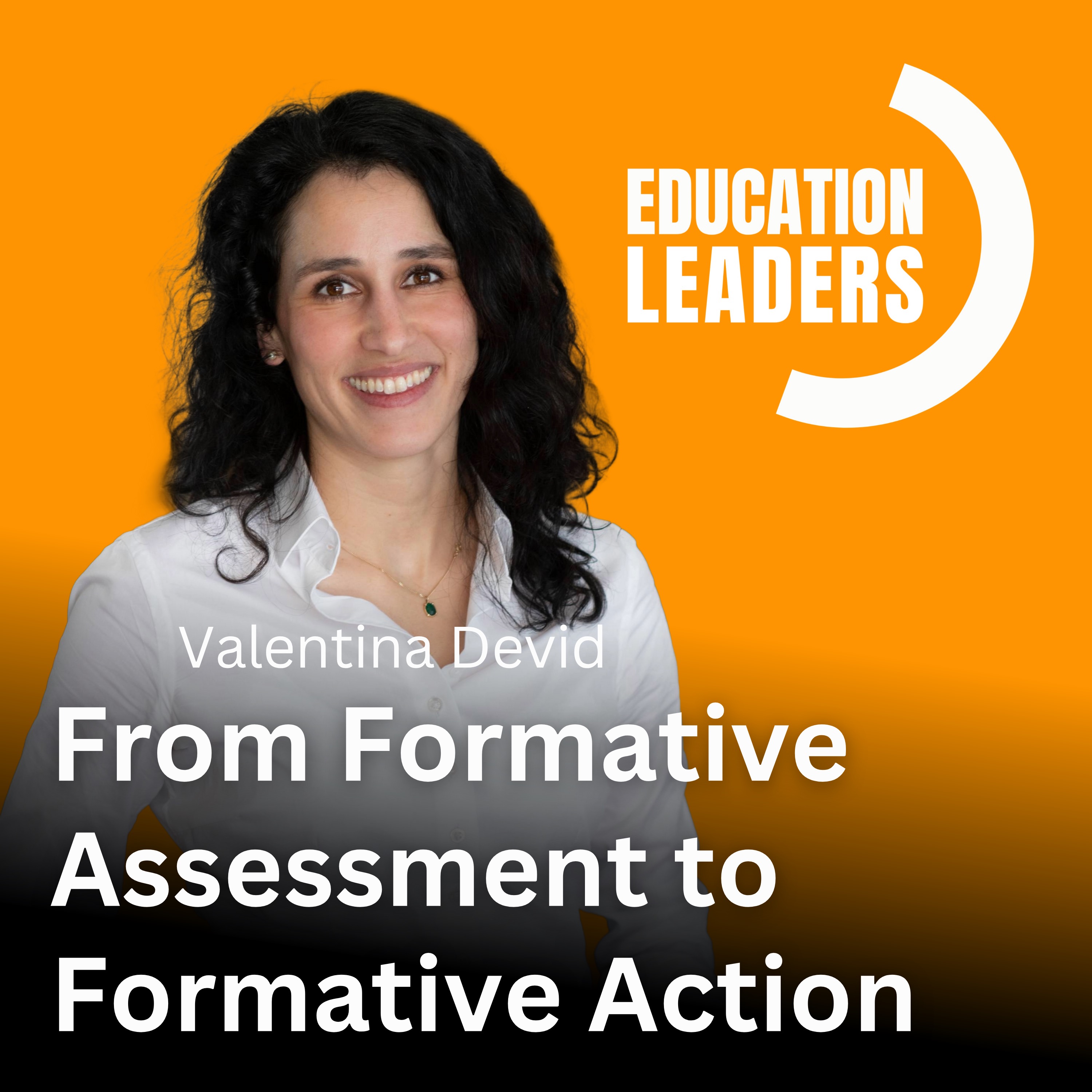
From Formative Assessment to Formative Action | A Conversation with Valentina Devid
This conversation dives into what formative action is, why Valentina Devid and colleagues reframed formative assessment as an…
Listen & show notes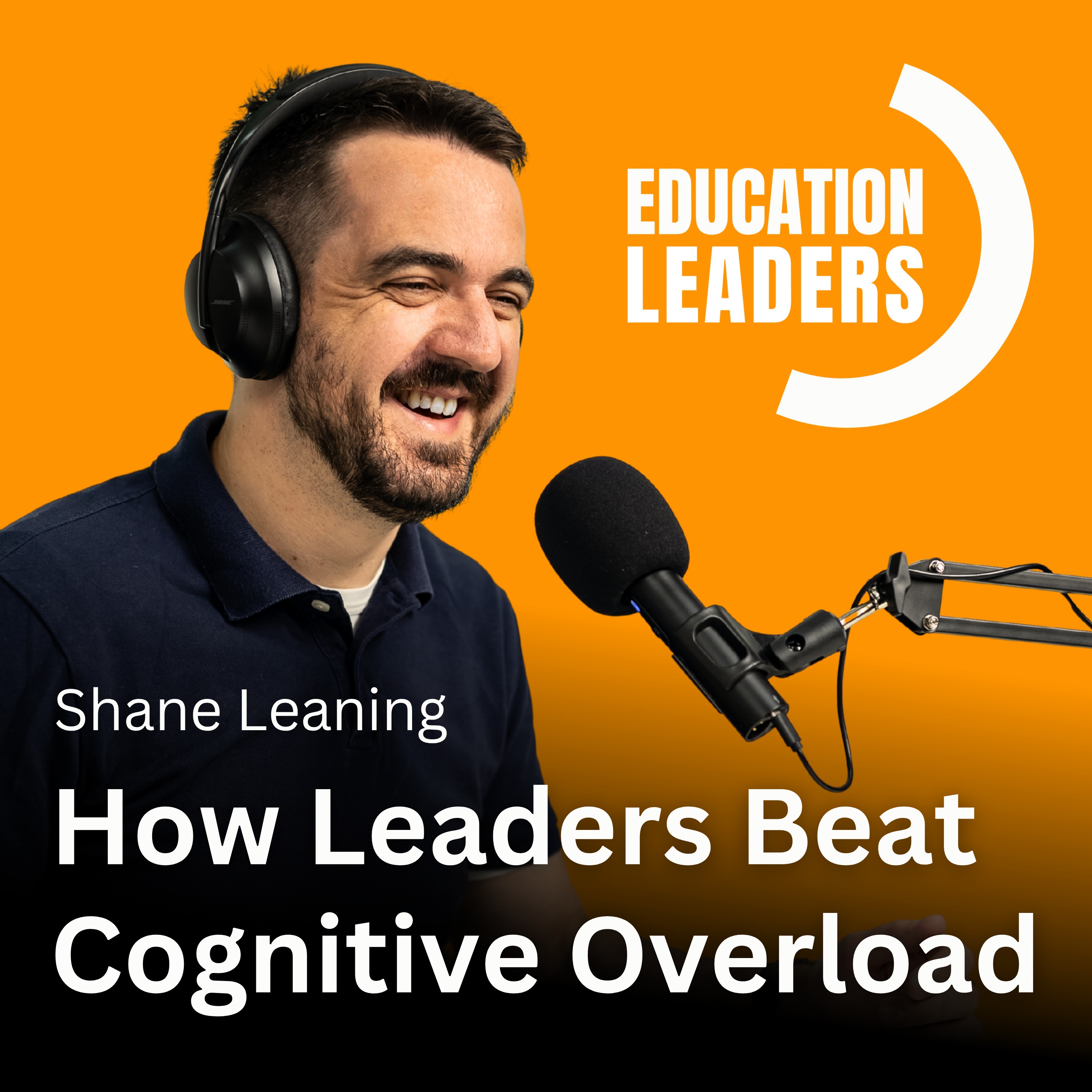
When brilliant teachers become exhausted leaders, it’s usually not because they lack ability — it’s because they’re cognitively overloaded by the basics. In this solo episode Shane explains what that overload looks like (the story of “Sarah” who dreads Monday evenings), why common leadership programmes often skip the fundamentals, and how cognitive load theory helps explain what’s going on. If you’re struggling to hold difficult conversations, run useful meetings, or make decisions without second-guessing, this episode focuses on a practical, sequenced fix rather than another strategic to-do list.
You’ll learn concrete strategies you can use tomorrow: how to systematise meeting types and agendas so they stop draining you; simple rehearsal routines and conversation frameworks to make difficult talks less anxious; and decision shortcuts (values + structured choices) that reduce daily friction. Shane outlines ten “leadership levers” (meetings, feedback, delegation, decision frameworks and more) and explains how making a few fundamentals automatic frees your head for real strategic work. Press play if you want immediate, small changes that quickly create more mental space for the leadership you actually want to do.
Click here to learn more about Shane's Intensive Leadership Programme
International Curriculum Association
Join Shane's Intensive Leadership Programme at educationleaders.co/intensive
Shane Leaning, an organisational coach based in Shanghai, supports school leaders globally. He is the author of the best-selling 'Change Starts Here.' Shane is a leading educational voice in the UK, Asia and around the world.
You can find Shane on LinkedIn.
We are a proud member of the Education Leaders podcast network. For more great education shows, visit educationleaders.co/network/
Hosted on Acast. See acast.com/privacy for more information.
Auto-generated transcript. It may contain small errors.
You were an incredible teacher and now you're a leader and every conversation feels just a little bit harder than it should. Maybe decisions are draining you. You're not struggling because you lack ability, you're actually struggling because you're cognitively overloaded. And today we're unpacking why this happens and what you can actually do about it.
Hey everyone, I'm Shane Leaning. Welcome to Education Leaders, the chat top in leadership podcasts for school leaders just like you. As an organizational coach I've helped thousands of leaders worldwide lead with greater confidence, make better decisions and create winning teams. And on this show we explore the strategies that are going to help you achieve your goals and transform your leadership. This episode is supported by the International Curriculum Association
and the Teacher Development Trust. Stay tuned to learn more. Now I see this pattern a lot. Excellent teachers get promoted to heads of department, assistant head, year-level coordinator and six months later they are exhausted. Not from
working hard but from the constant mental effort of just trying to get through each day. And often these people start thinking that they're not cut out for leadership. They may be wondering if they've made a mistake and their teams can pick up on this uncertainty too which makes everything worse. But that's actually not what's happening. Often they can lead, they are just trying
to do it whilst drowning in some of the basics. It's a different problem and that requires a different solution. So let me tell you about Sarah, not her real name obviously. A brilliant English teacher, amazing with students and gets promoted to the head of English. And three months in she's spending evenings
dreading tomorrow. She's got a difficult conversation coming up with a teacher who's constantly late. She's got a department meeting where she knows that half the room are gonna zone out and she's got this decision hanging over about adopting this new assessment system plus constant requests from her line manager, parents and colleagues. Now none of this is particularly complicated alone but Sarah hasn't worked out a system for any of it yet.
Each one of them needs her full attention. Every difficult conversation feels improvised. Every meeting means figuring out the structure from scratch. Every decision means wrestling with competing priorities without a framework.
That's cognitive overload. It's everywhere in school leadership. Now there's loads of leadership programs out there that promise to help leaders. For example the National Professional Qualifications which are in the UK.
But what do they focus on? Well predominantly strategy, vision, change management, leading improvement, all that important stuff. In fact you know it is important stuff. I wrote a book about leading change. Change matters. Strategy
matters. But if you can't have a difficult conversation without losing sleep, if your meetings are wasting everyone's time, if every decision leaves you second-guessing then jumping straight into strategy well it's kind of like trying to run before you can walk. Well worse than that. It's like trying to run a whole marathon and you're juggling at the same time. You are
asking your brain to do complex strategic thinking while it's already maxed out on the basics. So why do brilliant educators often become overwhelmed leaders? Well there's a pattern and there's three reasons probably. First we assume that good teachers automatically become good leaders. But teaching and leading are different skill sets in many ways. They
overlap loads of overlap actually but the skills don't transfer automatically. Being excellent at giving individual students feedback does not mean you're automatically going to know how to give developmental feedback to a defensive adult colleague. It's related yes but it is different. Secondly we promote people based on their teaching not necessarily on their leadership readiness.
Someone becomes head of science because they're a great science teacher for example. Not because they can have difficult conversations or run those effective meetings. We throw them in and hope they figure it out. And third mostly leadership development I have to say focuses on the sexy stuff. Change,
transformation, vision, strategic thinking. That's what sounds impressive in a course description. But who's offering how to have a difficult conversation without losing your sleep? Or how to make your meetings not waste everyone's time. Sometimes we feel it's a bit too basic right? Too simple. Surely
experienced educators don't need help with that. Except that they do. When they don't get it they end up like Sarah who I was talking about. They use all the mental energy on just getting through the day. Nothing less for the leadership
that they actually want to do. Now there's useful research here. You probably know it from cognitive load theory. John Sweller developed this back in the 80s. Originally studying problem-solving and learning and the
idea is pretty straightforward. You probably know this for your students. Our work in memory has limited capacity for processing information. Now Sweller and other researchers actually, they identified different types of cognitive load. Intrinsic load, that difficulty of what you're trying to do. Extraneous load
is all the unnecessary stuff that's cluttering your thinking. They also have germane load which is the mental effort that goes into actually learning and developing. Now when you're a new leader drowning in the basics your extraneous load is ridiculous. Every meeting means figuring out the structure. Every
difficult conversation involves wrestling with anxiety. Every decision. You're processing different competing priorities without a framework. That load eats up all of your mental capacity. There's nothing left for your germane load.
Nothing left for actual strategic thinking or the leadership work that matters. And the solution is not just to power through. It's actually about systemizing the basics so they become automatic. Moving from effortful thinking to routine processes. Think about almost like learning to drive at
first every gear change. You need your full attention. But now you can chat, you can listen to music, you can plan your day while changing gears without thinking that's what we need with leadership fundamentals. I think we understand this better than a student than from ourselves as leaders. Today's
episode is supported by the Teacher Development Trust. TDT's associate qualification in CPD leadership is so perfect for international school leaders. It's fully accredited and it's delivered online over 10 months. In it you'll create an actual CPD, that's Continuing Professional Development Strategy, for your school based on research that shows well-planned PD improves pupil outcomes and teacher attention. And I actually did this
program myself and hands down it's some of the best professional development I've ever done. So much so that I am delighted to be co-delivering this special Asia cohort which starts in November. If you want to learn more go to tdtrust.org or click the link in the show notes. This episode is
supported by the International Curriculum Association. Now I've been working with the ICA for quite a few years but they've been around for 30 years and they've been around championing quality, unlocking potential and improving learning in international schools right around the world. I really really love that at their core is a model for improving learning and this model is focused on the learning experience and they have tons of great curriculum materials, PD resources and even an accreditation pathway for schools just like yours. So if you're interested and I really do recommend you check them out head over to internationalcurriculum.com. So what might
this look like in process? Well if we go back to Sarah when I worked with her we started with the meetings. Not because meetings are the most important thing in leadership, they were just happening every week and they were draining her energy every time. So we didn't talk about strategic vision when I was coaching her, we didn't talk about change, we looked at meeting types, we looked at information sharing meetings for example needing a specific structure or decision-making meetings needing a different structure, problem-solving meetings needing something different again and we looked at some simple frameworks, purpose statements, agenda structures, facilitation techniques, how to close with clear action, nothing revolutionary just systematic and repeatable and actually after about four weeks something really shifted with Sarah because she started to feel a little bit less anxious on those Sunday evenings before that Monday meeting because she had a process. The structure
started to become automatic, she had a bit more mental capacity to think about her content and her team and what they needed. Now after that we tackled difficult conversations not with abstract theory but we were looking at practical frameworks. I've done episodes on this in the past. How do you prepare?
How do you start? How do you respond to defensiveness? How do you close with clear next step? And you need to practice these so we practice these together, these frameworks not once but repeatedly and in coaching yes but also in low stakes real situations. A minor-lakeness issue for example we talked about performance
concerned so we were trying to build muscle memory before she had these high stakes conversations and I worked with Sarah over a year and after about six months I remember her telling me that she finally felt like she had the mental space to be a leader and this was really profound because before she was just surviving and she'd actually changed to now thinking strategically and it wasn't because I taught her a new change strategy I taught some fundamentals we practiced them together. We cleared the cognitive clutter. So what are those fundamentals then? What do we need to try and become systematic? I think there's
ten core areas I've worked with hundreds of leaders on this actually and I call them leadership levers because I think once you've systematized them it gives you leverage. They are living your values that's using values as decision-making shortcuts instead of reinventing the wheel every time using your experience so how do you transfer that teaching expertise into leadership context you can do that systematically. There's communicating with clarity so looking at frameworks for different conversations so you're not always winging it. Fourth is mastering your meetings different structures different purposes making them productive. Fifth is giving powerful
feedback so frameworks that can help drive development rather than defensiveness. Next is nurturing potential how do you build trust and spot talent without exhausting yourself. The next is delegating so systematic approaches to letting go and building others. Next one is developing your team with structured approaches to build high performance team. There's owning your decisions so
you're using decision-making frameworks that reduce your decision-making fatigue and of course change management. Some people might be thinking but Shane you are all about organizational development and change management right? Why are you suddenly talking about meeting structures and difficult conversations? Now that is a fair point and one that I originally wasn't doing. I do believe in strategic
thinking and organizational change. I've literally written a book Change Stance here with Ephraim on how schools build internal confidence to lead their own but what I've realized much more and more working with leaders is you can't think strategically when you're cognitively overloaded. You can't lead change when basics drain all of your energy and you certainly can't be authentic when you are living in an anxiety mode. You need to clear those fundamentals first and give yourself capacity for some of that strategic work. Now to be clear what I'm not saying is that we need cookie-cutter
leaders. I don't think we need a course that creates everyone being the same type of leader. I think it's using frameworks not formulas which you are going to adapt to your context, to your personality, to your setting. So what we don't do when we're mastering fundamentals is dumb down leadership. We're just systemizing
some of the basics to free you up for more complex thinking not replacing it and it is definitely not about avoiding other leadership development as well but sequencing it properly. Get the fundamentals automatic first then build on that. If I tried teaching you some advanced piano techniques and you were still struggling with basic scales you would just get frustrated. You learn the scales first, you make them automatic and then you can start working with interpretation, with artistry. It's the same with leadership. Systemize those
basics then we can talk about vision and transformation. So for this episode here's what I wanted to take away. If you're a brilliant educator you know you were but you're feeling overwhelmed in leadership then you're not broken and you're not lacking ability. You're cognitively overloaded by fundamentals that no one has taught you to systemize and your solution is not just to keep putting in the hours and pushing harder it's to build a few systematic approaches to the basics so that they can become automatic and stop draining your energy. You know I've been thinking about this a lot in the past
year speaking to a lot of people and I've decided to do something about it so I've got a program launching an intensive leadership program launching in January specifically for this. This is three months working through each of these leadership levers I just mentioned systematically. How do we use rehearsal to make them automatic? How do we build your capacity? It's called the Education
Leaders Intensive and it is designed around this cognitive load problem. We're not just going to jump straight into strategy we're going to look at how we can clear that clutter first. So if you're interested you can go to my website shaneleaning.com forward slash intensive I'm only taking 25 people on for this first cohort I want proper interaction peer coach in real accountability but honestly whether you join or not and if you want to join it's shaneleaning.com forward slash intensive the principle is the main
thing if you're feeling overwhelmed don't assume that you need to work harder or that you're not cut out for leadership ask yourself have I systematized the basics or am I still figuring out every time once you systematize those basics you free up capacity for the leadership work that really matters for strategic thinking for authentic relationships for the change you want to create. Education Leaders is hosted by me Shane Leaning big thanks to my show editor Pete McGill for the production assistant Skyler Rose Sturman and for the original music by Guillemy Silva and thank you so so much for tuning in today if we don't speak before I'll see you here next week if you want to learn more about the brilliant work of the teacher development trust and the International Curriculum Association you can find them using the links in the show notes
This conversation dives into what formative action is, why Valentina Devid and colleagues reframed formative assessment as an…
Listen & show notes
What happens when you take a school leader who's used to timetables, structure, and constant visibility, and drop them into the chaos of…
Listen & show notes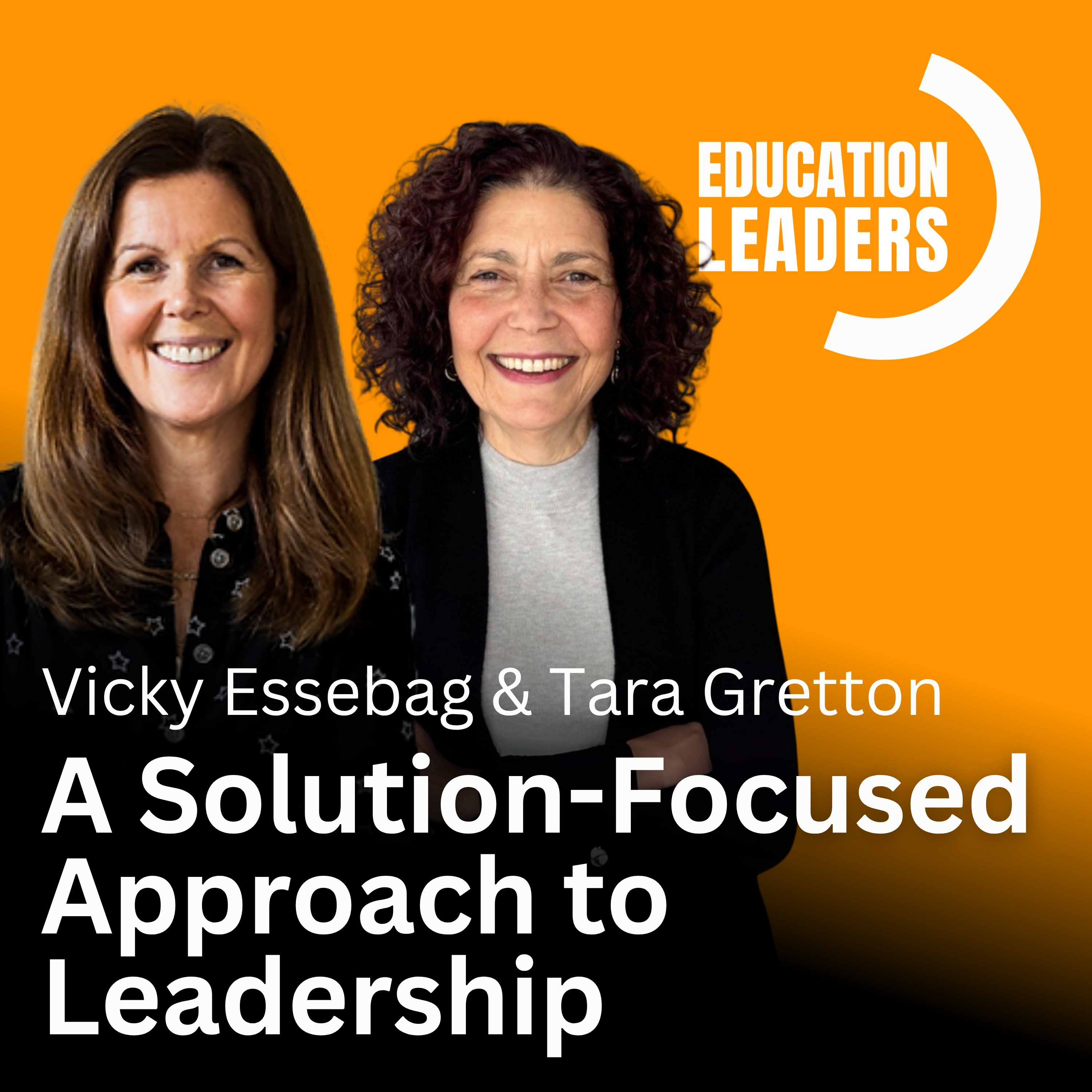
Struggling with staff meetings that spiral into problem talk? This episode explores solution-focused communication and how school leaders…
Listen & show notes