

How to Trust Your Teachers | A Conversation with Sam Gibbs
When Sam Gibbs asked, "Are we any further forward in honestly trusting the teaching profession?", she hit on something uncomfortable. In…
Listen & show notes
This month's Education Leaders LIVE brings together the big themes from November's episodes. Chris and Shane dig into what trust actually looks like in schools, why the shift from scrutiny to development matters so much, and whether leaders at trust level can genuinely connect with classroom teachers. The conversation around Sam Gibbs' episode sparks a proper debate about loss aversion and what happens when teachers stop putting themselves out there because they're tired of being judged. There's also honest reflection on Jo Robinson's coaching insights and what it means to be proactive rather than reactive as a leader.
The discussion gets particularly real when they tackle the "have you got a moment" problem. Is it selfish to protect your focus time? How do you balance being available with actually getting strategic work done? Chris and Shane explore the tension between open-door policies and the reality that leaders need thinking space too. Plus, they revisit Maureen and James' work on student leadership and why we shouldn't treat leadership as something kids either have or don't.
Episodes discussed:
Join Shane's Intensive Leadership Programme at educationleaders.co/intensive
Shane Leaning, an organisational coach based in Shanghai, supports school leaders globally. He is the author of the best-selling 'Change Starts Here.' Shane is a leading educational voice in the UK, Asia and around the world.
You can find Shane on LinkedIn.
We are a proud member of the Education Leaders podcast network. For more great education shows, visit educationleaders.co/network/
Hosted on Acast. See acast.com/privacy for more information.
Auto-generated transcript. It may contain small errors.
Hello everyone. Good morning. Good afternoon. Good evening. Kept you waiting there, didn't we? Kept you just on tender hugs at the start of this for five minutes.
Welcome everyone to Education Leaders Live. Really great to see you here. So whether you are in Shanghai with me, it's 6pm. Whether you're in the UK, it's 10am over there. Maybe you're squeezing it in from somewhere else entirely. It is really, really lovely for you to be here.
Wow, November's been a month. We have, gosh, it seems like five minutes since me and you were sat here, Chris, last month. How are you doing, mate? I'm all right, yeah. And what a set of podcasts to go through. I don't know whether I felt uplifted, worried, concerned about the future of education. I'm not quite sure where I fell with it all. There's a lot in there, hey?
Yeah, we've had the whole gamut this month. So for those who are tuning in, this is Education Leaders Live. So it's the partner live show to the Education Leaders Podcast, which is a weekly podcast for school leaders around the world. And we have had an amazing month of podcasts. I'm joined by Chris, and every month we're going to get together at the end of the month, usually the last Thursday, by the end every month. And we'll just kind of reflect on some of those things. And the idea is, is that we want you to reflect here with us. So you might be tuning in on LinkedIn Live, on YouTube Live, or maybe on educationleaders.live. You can go straight to that website and you can tune in live. And we would love to hear you. So as we keep going through,
use the chat box, let us know what you're thinking. If you come to educationleaders.live and join us, there is also a call in function. So if you're feeling really brave, you can call in and chat with us live. The idea of this is really for you to dig into the episodes and hear what's landing with you, what you're struggling, what have you tried that's actually worked.
So a bit of an overview of what's happened over this month. So we've had four episodes of Education Leaders this month. We've had three interviews. So there is a lot in there. We started off the month episode 133, James Simons and Maureen Chapman actually. And this was a wonderful little episode if you're interested in student leadership.
And these guys have got a great book, Leaders of the Class. And they have a really wonderful framework for student leadership, which reflected on a lot of interesting things on there. Then a second episode was called, Have You Got a Moment? Which is for those, have you got a moment conversations? What do you do when someone comes and knocks on your door and asks you that dreaded question, how do you actually respond? And should you feel selfish for saying, not right now?
That was a bit of a solo episode from me. Then we had two other interviews, two brilliant interviews with two brilliant women in the space. We had Joe Robinson talking about coaching for school leaders and the power of executive coaching. Joe is actually supporting me through a program at the minute with the ICCE, so it was a delight to speak with Joe. And then this week, wow, wow, wow, amazing guest, Sam Gibbs. These Sam Gibbs came on the podcast to talk about trusting teachers.
And if you've listened in and you've been thinking, wow, tell me, tell me more about that. Or I had to thought, tell us, tell us in the comments or unmute your microphone if you're on educationleaders.live. And we'll try to pick up your questions as we go. But Chris, what is on your mind?
Okay, well, it's kind of hard because I do have a favorite. I'm not going to tell you which one it was, but it was definitely a favorite in there for me. But I actually got to start with Sam Gibbs and the one that she talked. And I just wondered, out of the teachers that listened to this, how many of them actually feel really trusted in the work that they do? And how many of them maybe feel less than really trusted in the work that they do?
And it kind of made me reflect a little bit on my role as leadership. Did I trust everyone to do things in a slightly different way to the one I was maybe expecting or hoping for? And I can't remember whether I've met Sam or not, or whether I just really want to meet Sam because she was quite an inspiring sort of person to listen to. She talked about this idea that teachers have been subject to scrutiny rather than sort of developmental processes. And for me, this is something that I've had a little bit of a bee in my bonnet about for some time, particularly around things like the Offstead Inspection frameworks and things like that. And you've seen bits and pieces that I've written in work that we've done. And you've probably picked up on that.
And I look at that and I'm horrified at not just the process of scrutiny without development in and of itself, but all of the lost opportunity for that development, the human capital that you have, the ideas, the creativity. And I think we often don't talk about the stuff that doesn't happen as a result of scrutiny. We often talk about the kind of challenges that come with scrutiny, the negative sort of sentiments and things like that. But often we don't talk about that kind of longer term loss of creativity and the fact that it just kind of gets beaten out of your ground out of your top offering up ideas.
And there's a really interesting concept and it's from Kahneman and Tversky, I think, and they studied about loss aversion and the idea that we're more fearful of loss than we are of focused on sort of doing positive stuff. And eventually we get into a cycle of not wanting to put ourselves out there. I think that that's probably one of the great harms. And I love this idea of kind of developmental trust that Sam was talking about. And then I sat, I questioned, she's got a pretty amazing job.
And I'm not sure it's a job that I would necessarily be able to do. I thought about working at that sort of systems level, that really top end level for a trust. I thought you were about to bash Manchester then. Okay, you're all right.
No, no, wouldn't dream of that. You know, I'm a Newcastle fan. They've got two sort of semi-decent football teams, that's all right. And, you know, can't all be as good as Newcastle in that respect. I'll stop there. But she's got this huge job and she's talking about values and instilling values further down the ladder.
I was kind of intrigued as to how you do that from that very top level, because you're trying to sort of move away from that kind of hardcore accountability model and trying to bring in that trust. How do you do that? You've got such a gap between you and the people in the shop floors. You're a leadership coach, you've probably got a focus on that, that maybe I haven't.
Well, it sounded to me like, you know, what it's nice to hear, and I loved about this conversation, it's nice to hear people in trust leadership positions who are not leading in that traditional way of, okay, my trust level is to kind of manage the schools. And then their principals should then manage the department leads and the department leads should manage those. But actually, Sam almost talked about how she worked as a connector, really. And I loved a few of the examples she gave us. She might be speaking to a colleague in the school and go, I know someone who you are going to get on really well with, and you're going to be able to collaborate on this.
Well, how would you feel if I connected you? And I think that was quite a powerful inspiration for me for something that's going to work better than kind of doing on to schools. Yeah, I think there was there was a danger that kind of came up that I recognized Sam was talking about her role being sort of digesting material and trying to sort of bring that down to a manageable level for people in her organization. I think there's always a danger when you digest stuff on behalf of others, that you shape it towards your perspective rather than necessarily embracing the creativity that might be out there and seeing those different interpretations.
I think a little like James Simons talked about. James has got time to think in the work that he does now, and you and I have that too. And I wonder if maybe I'm just being unduly idealistic thinking that the teachers have got that time to digest all of this kind of material and all of this sort of thought leadership and turn it into meaningful practice. I do wonder about digesting on behalf of others as it made me a little bit nervous because that then imposes your sort of value structure, your ideas.
Yeah. And then there was talk of frameworks and stuff in there as well. Yeah, you're speaking to something that I think is quite interesting, like, and it's something that I have some quite heated debates with some people about, like when we're talking about people who work outside of schools. And some would have you think every, you know, there should be no people who work adjacent to schools.
Like some people almost talk in that way, like the teachers should own everything and the teachers should, you know, and therefore they're fully empowered and fully empowered to lead themselves. And we don't need consultants or trainers and people coming in telling us what to do. But at the same time, it just doesn't, it doesn't go with the reality that teachers are insanely busy, in most, in many cases, insanely overworked. And actually, I think there is room for a rich body of people within our sector to be doing that thinking, to be doing that synthesizing.
But that then runs the risk, doesn't it? If you've got that body of people and that huge, rich resource, they can start doing the thinking for the schools. And where does that balance lie? Yeah, it was interesting because I kind of see, you know, the pragmatist in we saw some of the things that Sam was talking about in terms of frameworks and work that you do to develop that sort of trust-based leadership, feedback loops and things like that.
And I think the danger is that the moment you create a framework, it just becomes an administrative task to be done. Some people don't necessarily interpret that as a sort of values-driven process. And I think that values-driven process does require time and space. It's the old concept of sleep on something and it becomes clear, you know.
We've talked before about having that time to think and the kind of work that we do. If nothing else, on airplanes, you know, we've got hours and hours of fan-up and all videos in front of us. And we sort of, you and I end up spending time thinking and some of those ideas come to us in that space. And I think back to my teaching career, when did you have time to think? You were just getting stuff off your desk.
I wonder if in the sort of, you know, you're right, maybe there is a sort of halfway house that's maybe not quite as idealistic as I'd like to be. Well, let's flip back on that, Chris. Because you mentioned Maureen and James as well, so let's kind of reduce ourselves in age and where this all begins. I wonder, like, what were you thinking when you listened to that?
For listeners, Maureen and James talking about student leadership, like, and actually them having leadership capacity, which is another level. This one rocked my world. I'll be honest with you. And it made me feel a curious sense of shame and optimism and all sorts of things.
The sort of schools that I worked at in the UK have very robust student leadership programs in the classical sense, not necessarily modeled in the way that Maureen and James were talking. And I've watched those selection procedures go on at 6-1 level. I was predominantly a 6-1 teacher by virtue of my subject. And I've watched those selection processes go on where they've selected the student leadership team.
These kids are like 17, 16, 17, and you're starting to kind of grade them on the basis of their innate qualities as leaders. Rather than developing their capacity as leaders, you're starting to say, well, okay, you're a leader, you're not, rather than saying, well, this is what we can do to develop that leadership within that individual. And I love the idea that ultimately leadership kind of comes down to that confidence thing, that confidence in yourself and being able to put yourself out there, because really that's what leadership is. Certainly for me, and I watched this and I thought, you know what, what is our role as teachers? What is our role as a school? Well, our role is to develop youngsters.
It's not necessarily to stream them off into particular boxes and say, well, that's what you are, and that's what you are. It's our role to develop them and things. And I love this idea that there's more to it than natural leaders. I think James talked about that idea of the classroom teacher teaching maths when a student wasn't hitting the grade with maths, but then you identify someone as a natural leader or not, and that's it.
That's what they have, and that's what they don't have. No concept of development around that. It kind of rocked my world. I wonder, it maybe even shaped my understanding of what leadership is, and I wonder what your perspective is as a leadership coach on that.
Well, you probably could tell by the tone, I was quite excited in the podcast because it was a really good conversation. I felt it was really good because it helped me go back to myself. Maureen talked about her leadership experience and what maybe people would see as a natural leader and what maybe people would see as not a natural leader. In fact, I loved James and Maureen's opposite ends of the spectrum where there are things like with Maureen being this kind of person who maybe labeled not a natural leader because of different types of qualities, more introverted qualities, if you like.
And James taking his whole cohort of students with him onto the highway for a photo because he was that bold student leader. But he's right. Maybe people would have seen him as the natural leader in that setting, and that's because of someone in age and not actually seeing that. To be a leader does not just mean you're extroverted, does not just mean you're confident to kind of speak up in a public place, but there's so many aspects of leadership. That is just one small part.
And for me, it was just amazing to reflect that we wouldn't take that approach with other areas of the curriculum. Someone can't do some maths, and we wouldn't go, well, they're just not a maths person. Let's kind of not develop them in that area. That's not how we operate. So why are we allowing this to happen? Oh, they're natural leaders. Give them the opportunities in leadership, and don't worry about the others.
Yeah, this loops back to the stuff that Sam Gibbs was talking about, and I kind of wondered about this concept that because we've had such a very strong accountability model in the UK, which is mirrored across international schools on one level or another, that's amounted to a level of control amongst teachers. I sort of wonder whether we sort of transpose that onto youngsters as well, and we maybe don't necessarily give them the scope for leadership. You know, we have very strict parameters in terms of getting through the curriculum. We've got a set of things that we have to do. Time is tight. So we have very little space to just kind of open the door and let students kind of explore.
But, you know, the best lessons that I've had is where you've just had an open door, not much structure, and you've had discussion around bits and pieces with students. That's where the real magic happens for me. And I just kind of wonder whether we've sort of missed the point with this whole idea of student leadership, historically, as I've done it, and being involved with it. And maybe there is that scope to do this.
I'm going to pick up this book and have a read of that. I'm kind of sold on this idea. It's a great book because it's just practical. Literally, it's almost like a step-by-step workbook to implement this kind of program, which I just absolutely love.
And I know that I see their social medias now. They are getting lots of wonderful traction in this area, which is pretty awesome. And if you're a parent and you're sending your kids to a school, you kind of want them to be at a school where the teachers get them, the teachers value them, and the teachers develop them in all aspects. If I'm totally honest, from our perspective, my wife and I, we're far less worried about the grades that our kids get than them being happy, comfortable, accomplished, confident individuals, and able to kind of venture opinions and ideas and support friends.
And all of those kinds of soft skills that are quite difficult to measure and so forth, but they are real and important and possibly more important than anything in this world. So would you be happy as a parent if the school decided to reduce some core areas to increase it with these kind of leadership development sessions? Totally. Or would that make you feel uneasy?
You'd be good. I'd be absolutely cool with that. Maybe that's because I've been on that educational journey and I've sort of seen, you know, I've seen large numbers of kids go through the process. I've seen where they got to.
I've seen kids maybe make some poor choices when they got to the end of school as to what they want to be because they haven't had the time to think, relax, consider the sort of wider picture. Maybe I'm just an old hippie now, I don't know. Well, let's talk about the other two. But first, before we do, Chris, I want to ask you, just for the sake of people tuning in and going, what on earth is Coro education that is in this background?
Tell us a little bit about what Coro is, just so we've not got a totally bamboozled audience. Okay, Coro, basically, I was working in the commercial world. I've been an educator, worked in schools internationally, joined the corporate world through a series of sort of happy accidents. And then I just got to a point where the pressure to kind of advocate for a product started to lead into my sort of educational integrity, if you like.
So brought together a team of people that yourself includes, and we started to offer services, advice, guidance to schools. My particular specialism is around school data and AI. And I'm just back from a bit of a tour of Southeast Asia where we were able to catch up at the Festival of Ed. So I kind of go to places, talk about education.
I do work with schools, and we've got a series of courses coming out in December, and they will be available for people to subscribe to. They're not the kind of standard sort of standalone courses. And I think when we get into the discussion from John Robinson, we'll talk a little bit more about this. But the idea is I was a little bit inspired by some conversations with you and others earlier in the year where CPD kind of builds up a hubris at the event and then is forgotten within a week.
And the construction of the courses that we're offering is that idea of multiple touch points throughout the course of the year, relevant ideas at that particular juncture in the year. We've got Kale Alesia that's offering a literacy one as we go. I've got the data and AI and so forth. Corrie actually is the sign for new beginnings in Maori culture. It's the unfurling fern.
And I spend a little bit of time in New Zealand, and I kind of like the colour green. So it all sort of made sense and brought it together when I was putting Corrie together in the summer. And that's kind of where it comes from. And I hope that I can make a living, enough of a living, by maintaining academic and educational integrity in the work that we're doing.
I'd like to give a little bit of a shout out to Kless Lyle there at BVIS in Hanoi, who had us in both as a keynote speaker and doing some work with this school. That was a little bit of a breakthrough for us. So thank you, Kless. You're doing some awesome work, definitely. If you're listening, check out Corrie.
Just doing some brilliant and meaningful, meaningful work, which is great. And it's nice that you've kind of linked us so well into the discussion. So this other episode that we had on education leaders with Jo Robinson, which I just loved, that idea, to pick on what you said. How do we, we might have done some learning and in her perspective, she was talking about leadership programs that we might have done.
And I know Jo took his MPQs and different things with universities, but then what? And how do you kind of sustain and actually build momentum in your leadership practice? Jo offered, I felt quite powerfully, a reason why executive coaching can be a really useful tool for leaders to go through. What did you think?
Yeah, I think it's probably worth floating what coaching actually is. Because there are some portals where it's seen as a little bit loose, a little bit fluffy, and kind of, hang on, what are we getting out of this? Because people look for tangibles. And I can't think of a better man to tell us about what coaching actually is than your good self, Shane.
So you're putting me on the spot to define coaching. It's like, go on. So do you know, actually, I was on a call yesterday with the brilliant people at PeerSphere, actually, talking about coaching. So I'm in the zone, and I've just gotten off a coaching call with a client.
So I should have a fair idea. The problem is that there's many definitions of coaching. So this is one of my biggest bugbears, is when just people start arguing about coaching and talking across each other, when they're talking about different things. And I think it's quite unfair.
People go, that's not coaching, that's not coaching, this is coaching, and that's coaching. I think we have to get to a sensible adult point where we go. There are different, coaching is used to describe different activities, and that's okay. And we maybe have to define what we're talking about.
So in a sports setting, if you're talking about, you know, tennis coaching, football coaching, well, it's probably going to be quite directive coaching, isn't it? You're going to be working with an expert who's going to be looking at your form, correcting you, giving you advice, and helping you to see what you can't see. And there's going to be a level of direction. But then you could go to the other side of coaching where, like, that Joe's worked in, in executive coaching, where it's a facilitative process, where a coach is there not to direct you and to correct you and to get you in that space, but actually to ask powerful questions to allow you to discover things for yourself.
And that's facilitative. But there's also coaching that's kind of in the middle between that. Maybe you're doing instructional coaching in schools, which generally sits kind of in the middle. Jim Knight would call it the dialogical coaching space.
And that's where you might be a coach working with you going, well, let's try to be facilitative. Let's say what, you know, what are you noticing? But also I'm here with some expertise. So let's have a conversation about this and maybe I can offer things into the conversation.
And that's a more dialogical approach. But there's kind of, there's a spectrum, isn't there? Yeah, there is. But I was kind of, I was sold on this as an episode, partly because I'd just come back from the Festival of Ed, where I'd done a session about the future of education.
And the basic tenet of that session was that perhaps in a world where knowledge is ubiquitous, we've got AI that we can ask questions of, perhaps the role of teachers maybe needs to change and move away from this kind of guardian of knowledge through to something more coach focused. And actually, maybe we don't even need to be subject experts anymore. We just need to be good coaches in the work that we do with students. I'm trying to read whether that's an eye roll from you there, Shane.
So yeah, this is a really good one because I changed the wind on this, and it depends who I'm speaking to. Because I think there's solid arguments on both sides. I think there's a lot that teachers can step into the place of coach and be coach-like in their teaching to allow students to surface things that are important to them, that are relevant to them, especially because it's their world they're going into. And a lot of the time, they're sensing things that we're not attuned to as adults, because we've come from a different generation.
But at the same time, there's a responsibility of educators to push, to deepen, and to give a base set of knowledge that students can be creative with. You can't be creative without a set of knowledge to be creative with. So there is a responsibility on the teacher to bring students into that world, if you like. I think in the system that we're in, I think what you say is absolutely true.
But I think the system that we could be in is, if as a teacher, you were to go on that journey with those youngsters, discovering that knowledge, building that knowledge, you don't necessarily need to be an expert in that field to go down that journey. And that journey is a powerful process. That shared experience is the kind of thing where you can influence the behavior, the attitude, the values of youngsters. And I kind of wonder if, in time, that's going to become inevitable anyway.
I told you I had too much time to think, didn't I? I love this. By the way, okay. So we're going to have caused controversy in that few minutes.
I'm going to clip it, and it's going to go viral. You just watch, because this divides people so much. And I think it divides people because of the tension you described as to how schools operate at the minute, and what we envision as how a school can work, and the reality of schools, because we don't live in the future yet, and what they could be, and that vision for a school in the future, which I know creates this tension. Like, I always think back to Ken Robinson's talk, which, you know, the whole...
And it's very difficult to argue with his idea. The problem is, is no one's been able to conceptualize it in a way that actually works at scale in the reality that we live in with the schools that we have. And I always think that is the tension that we have between reality and practice and evolution from where we are to there, and kind of like what we would design if we could just rip up and start from scratch. We're just not in that situation.
So I always think, oh, it's a real tough one. And I struggle with this conversation a lot. But who's going to take that debate forward if it's not educational leaders? You can see the pedagogy, the process, the benefits.
If they're not going to drive it forward, the people on the shop floor are going to find it hard because they don't have the strategic decision-making power and so on. And, yeah, I recognize both sides of that argument. I've probably spent too much time reading stuff like Ken Robinson, if I'm totally honest, and maybe not enough time sat in a head's office trying to manage a school on a day-to-day basis, which is a totally massive pressure that I don't need to worry about. Totally. Well, on that pressure,
I think this is a perfect way to talk about the other episode. And before we do, I just want to kind of encapsulate. So this other episode was the Have You Got a Moment? And I do these little solo episodes every other week.
I've got a really good one coming out next week. I'm not going to tell you what it is, but I'm very excited about it. I'll raise a few eyebrows, I'm sure. But these are like little solo episodes that maybe help you with a specific leadership practice.
And in a way, they're linked. I've got a program that's coming out in January. We've got an amazing cohort for it. And Chris and I actually am working with Coro's Delivery Partner into the future with this education leadership intensive, which is dead exciting.
But the idea is that I've got a cohort together. It's not traditional leadership programs. 80% practice, 20% theory. And we're mastering 10 levers you can use every day, those little things that cause cognitive overload, like if not mastered, like how to run a meeting effective, how to give feedback, how to have a difficult conversation, how to delegate, these kind of things that you do every week that either drains you or frees you up to be able to do that real strategic work.
And I'm really excited to be able to work on that intensity. If you're interested, you can go to shaneleaning.com forward slash intensive. There's still a couple of places, but you have to get in quick.
I've literally had a few more people sign up just today. But we've got a cohort starting in January. And one of the strategies we look at in that program is this idea of when someone knocks at your door and says, have you got a moment? Like, what do you do?
I'm curious, Chris, like, you know, what did you take away? Did you, because it caused a bit of a stir in some of the comments online. Yeah, here's the thing for me is as I listened to this, and I thought back to sort of how I viewed leadership when I was involved in it directly, there's a sense that you're appointed to a leadership position because you have the answers. You are expected to have the answers for those around you and that kind of have you got the moment is an implicit part of that process.
People are looking to you for answers and so on. And I think within that, there's a sense that perhaps a certain degree of reluctance, certainly on my part, to admit weakness, vulnerability, gaps, or anything like that. And I would have never dreamed of saying to someone, listen, I'm just like, I'm struggling today because I've got this, that, and the other on. Can I just come back to you tomorrow?
And I think that idea of not right now needs to be caviated with that idea of kind of a degree of vulnerability or honesty if you're going to get that honesty in return. But I also sort of thought to myself that there is always a risk that if that response isn't as it needs to be. It's like when a child comes to you in a class and asks if they can talk to you. If you turn them away because you're going off to your year 11 football practice or you've got your staff meeting in two minutes and you need to be down the corridor.
If you turn them away at that moment, that moment might just never come back. Yeah. How it presents in terms of have you got a moment doesn't necessarily always convey the urgency, significance or what have you to you. And I kind of would worry about my response not trying to dig into that first before I decide what to do because my year 11 football practice might be able to wait 10 minutes or the staff meeting can talk amongst themselves for 10 minutes if this is really big.
And you don't quite know what really big looks like and what really big to someone else is might be trivial to you. But it doesn't matter at all about that subjective sentiment and you might lose that person very easily if you don't engage that. Yeah. I think that's a good point.
I think for me there's a few things at play. One, you absolutely have to try to learn as quickly as possible to get a sense of what's happening and I think this is where digital intelligence comes really into play into trying to really get a sense of what is this person trying to tell me. And I definitely don't think the instant response should be not right now but putting it in there trying to put it in a way where they can make a decision as to whether it can be right now because I mean you're always making a choice. You might choose them in this moment but maybe that staff meeting that you go to some there's been a few staff who have had the most horrific day and would have really liked an extra 10 minutes at their desk and you asking them to stay for 10 minutes has really knocked them off of their day and you've just created a whirlwind there.
So it's like you've always is a balance of whose time whose time we are respecting. So I think always trying your best to make an offer to that person as to get the sense of what it is now or to be clear and to set a boundary and to say hey you know I can talk to you now what I can give you now is two minutes of my full attention but unfortunately that's all I can give you right now but I'll give you my full attention. What I can give you if this requires more I can give you two minutes now and I'll tell you what I can give you 30 minutes at the end of the day if you can come back to see me now we can sit down properly. How would that work for you?
Would you like to take that two minutes now? More often than not they might say do you know what actually this could wait or maybe they say yeah I just need to tell you something and then you can actually you've set the container and you can say I've heard you I see you like this is important let's let's continue this this is this is this is really important to me will you come back and see if you can get that commitment for them to come back into that conversation so you don't lose them. I think you're right and I think that idea of giving your best to someone giving it your full attention is huge because there's nothing worse than feeling that you're not really being listened to as it were. One of the foundations that I found in this is something that worked really well in Italy we had like a drop-off area and pickup area where parents and kids sort of milled around at the start and end of the day and we were required to be out and about there and what happened was you would talk informally to parents quite readily sometimes you might be talking about the football or the weather or whatever it happened to be but it meant that when there was an issue they could kind of grab you and have an informal chat without an appointment you were effectively blocking out your diary that moment that you didn't know if someone wanted yet but you knew that they would do at some point and you're making yourself available for that and that idea of having available time where you are you're consistently there I'll catch Chris this afternoon in the sort of drop-off area or as a leader you can have time blocked out as a drop-in session where you just say okay yeah I'm available on those days at this time you know lunchtime on a Monday lunchtime on a Friday just come and see me the doors open at that point and we can have that chat and we can start the board rolling with whatever the issue is and I think that that's quite an effective way to do it and it means that people have got an anchor for the problem rather than it's necessarily a problem the thing that they want to talk about and it doesn't sort of fester they can bank it okay that's a Friday lunchtime thing that I deal with and I think that quite often what gets frustrating is you go to people you want to talk to them you can't get in and you don't have an alternative solution to that kind of builds and you know I'm familiar with the problems that overthinkers face and it can escalate in your own mind when it maybe doesn't need to yeah that really resonates for me yeah in fact someone online they brought up the idea of you know in their school that they were just starting to operate this place where they just set aside a bit of time where people can come and then the rest of the times closed offs which of course caused a lot of controversy as well because it does like so that's not necessarily the right approach to kind of say we've got you know only this time for you but at the same time I have to say like the role of it you have to look at wider what your role as a leader is and I think there's a lot to be said about communicating to your team what that role means because I think if they understood they might have a bit more empathy like as a leader you can say my role is only to be available to you like that will take up my whole time but as such I'm going to not be able to put very good effort into organizing those things that make your life a lot easier day to day into those things and a lot of that background leadership stuff that you will complain about as a teacher if it is not done so we've got to have a bit of a balance here because while I absolutely need to be available for you and to listen to you I also need to ensure there's a lot of other things that are happening in this school and that this school has a strategy going forward and that we're able to act on the feedback that you're giving us to improve this school and that needs time, that needs focus time too, I need focus time as a leader you need focus time as a teacher too and I need to respect that so there's there's a balance for play and I think you kind of hit on it at the beginning like it's about transparency and not understanding between leader and between staff as to what our roles are and having a little bit of empathy I guess towards each other you know and I wonder about that I wonder if you go back to the stuff that Sam Gibbs was talking about the trust, the challenges that our hyper-accountability model has brought over the last 20 years I wonder if maybe it had taken a more developmental approach to the work of teachers, to the work of schools and things like that, whether that dialogue could happen a little more steadily and as leaders we'd be a little bit less nervous about being human and having frailties and things like that and having vulnerabilities I just wonder if maybe we'd stepped away from that kind of really strong model of accountability and scrutiny and towards something infinitely more developmental whether we'd all benefit leadership teachers and ultimately our pupils Yeah, that's a perfect perfect link back to the beginning or back to this week's episode which Sam gives which people should check out really good thoughts about how to ensure that there's a high level of trust in what your teachers are doing and where you know a bit of a wonder of where the line can be drawn I think it's super interesting What are you taking away with you into the next month Chris, is there anything that you're talking about as we go into December?
There's an awful lot going on in December for me we've got our projects going on I don't know how much of that we're able to share or otherwise but I'll leave that with you there's a lot of stuff going on there, we've got the courses that are being released so we've got the literacy course and things like that, we've got AI and I'm starting in January doing a little bit of a free AI webinar just looking at different platforms and how they can be used in schools all you do is just come along, join us and watch these things in action or watch the recording so we've got all of that, I've got to squeeze in some Christmas holidays with the kids and things like that and it's nice to have a little bit of a break from the travel November, like you well know is a pretty intense month Yeah, it has been hasn't it? and it takes its toll it's great stuff to do but it does take its toll on you and I'm looking forward to a little bit of down time later in the month Yeah, me too well let's try we'll get another live space in, in December we'll probably do it a week earlier maybe than usual so we can get it in and we've got a great month ahead on Education Leader so I can tell you that coming up we've got some discussion around quick fixes in schools and how quick fixes go down so that's going to be fun we've also got a great conversation with Yael Cass on Organizational Development in schools and then some brilliant work from Tamara Proctor on, who is from United World College on inter, kind of the intercultural play in leading projects and there's a lot of like work on leading teams and projects in schools that I know people are going to find super fascinating interesting I had one or two big culture shocks and lessons to learn when I set off on my international journey it's a big one it's a big one and then in the future you are going to hear from a lot of different people we've got James Manion coming on on the pod we've got the brilliant Meg Lee on the pod we've got Chris Baker coming back for a second episode, Andrew Watson, Poppy Knows, we've got Simon Probert we've got a lot of people coming on on the pod with some amazing thoughts and ideas soon so it's a really exciting season ahead yeah looking forward to, there's some names in there Simon Probert and so forth really looking forward to hearing from yeah that's going to be good, Chris thanks so much this has been an awesome chat really enjoyed reflecting with you appreciate it it's always good the catch up shame we should we should do it more, it's just a shame we can't do it more in person yes well we will have an in person episode I'm sure at some point a festival or something we'll make sure that's happened but thank you for being here thank you for those who have joined in live it's been really great to have you here if you're tuning in to the bonus episode which is on the podcast then it's great to see you come the last Thursday of every month you can check out you can sign up on LinkedIn that's probably the best place and then you can set yourself a little reminder if you go to Education Leaders if any of these episodes hit home please share them with your team not as homework just you know just this made me think and thinking of you it's been a really really great conversation we do this last Thursday of every month 6 p.m. Shanghai time 10 a.m. London time
you can join in on LinkedIn, YouTube or Education Leaders live that's us so keep doing the work that matters you're not alone we're here with you I'll see you all here next month take care. Thanks Shane, thanks everybody
When Sam Gibbs asked, "Are we any further forward in honestly trusting the teaching profession?", she hit on something uncomfortable. In…
Listen & show notes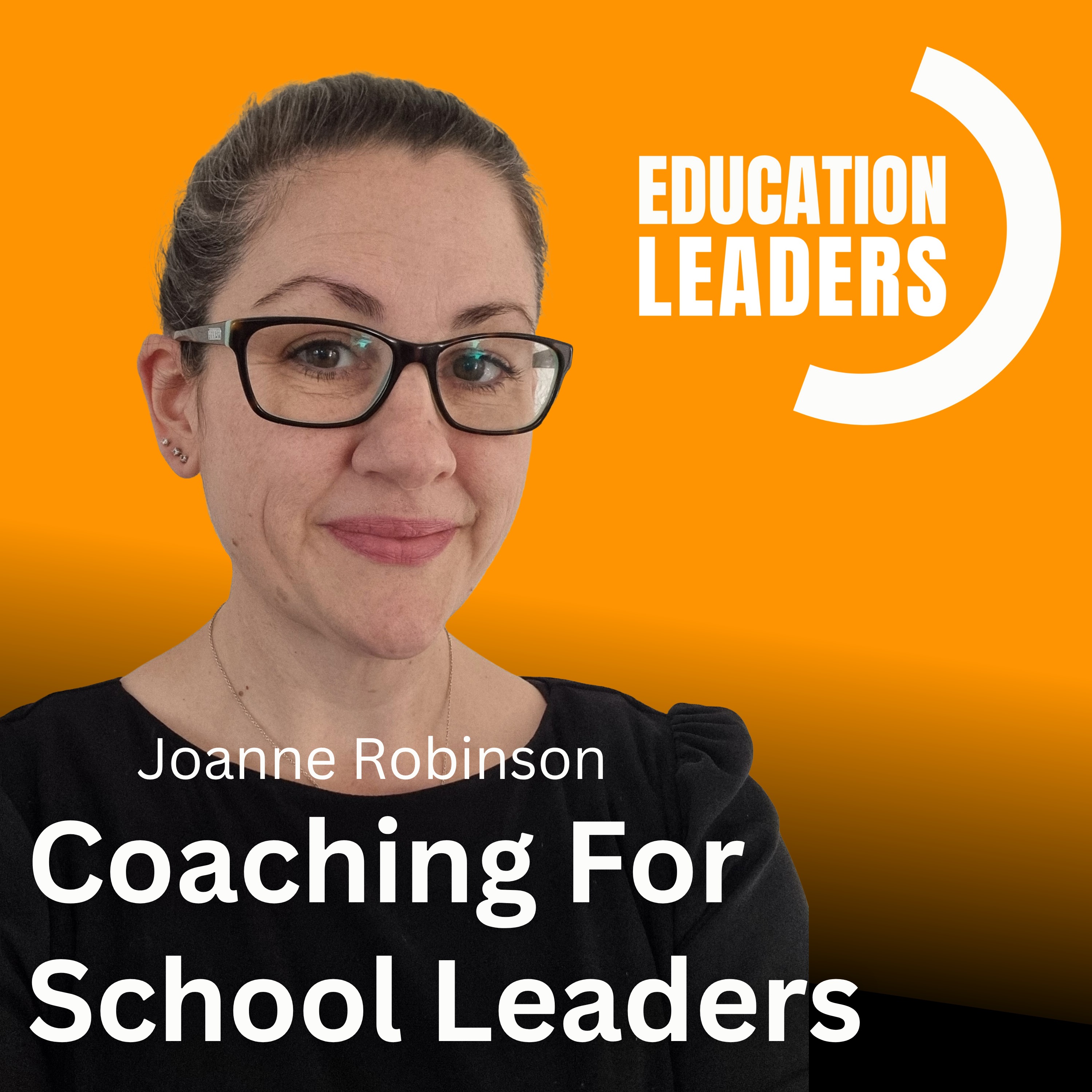
When Jo Robinson joins Shane, they focus on a simple, urgent problem: too much of what passes for professional development in schools is…
Listen & show notes
When someone says “have you got a moment?” your instinct might be to say yes — and then lose 20 minutes, your focus and whatever calm you…
Listen & show notes